
Customer history without the scavenger hunt
Know the customer before you roll a truck.
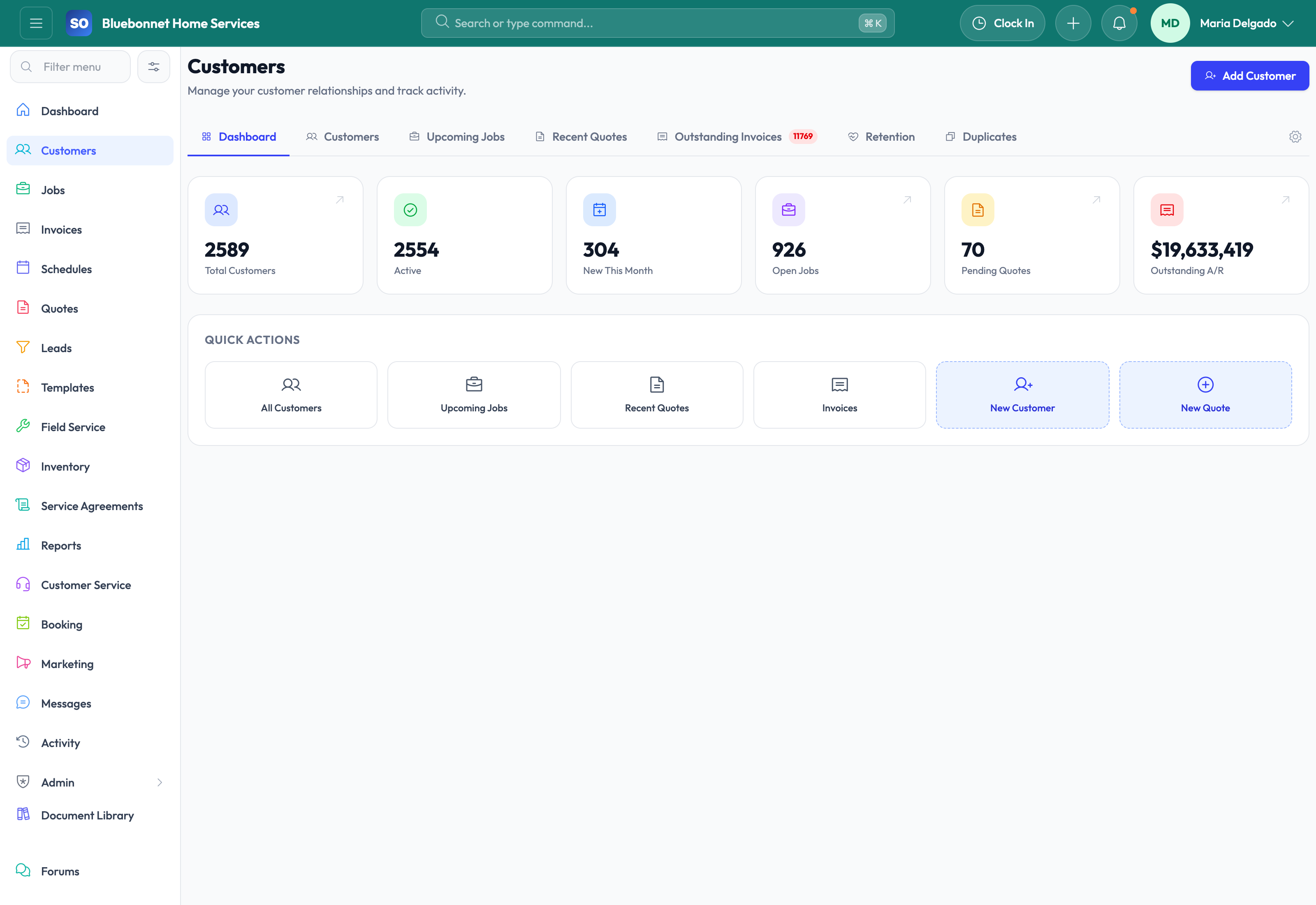
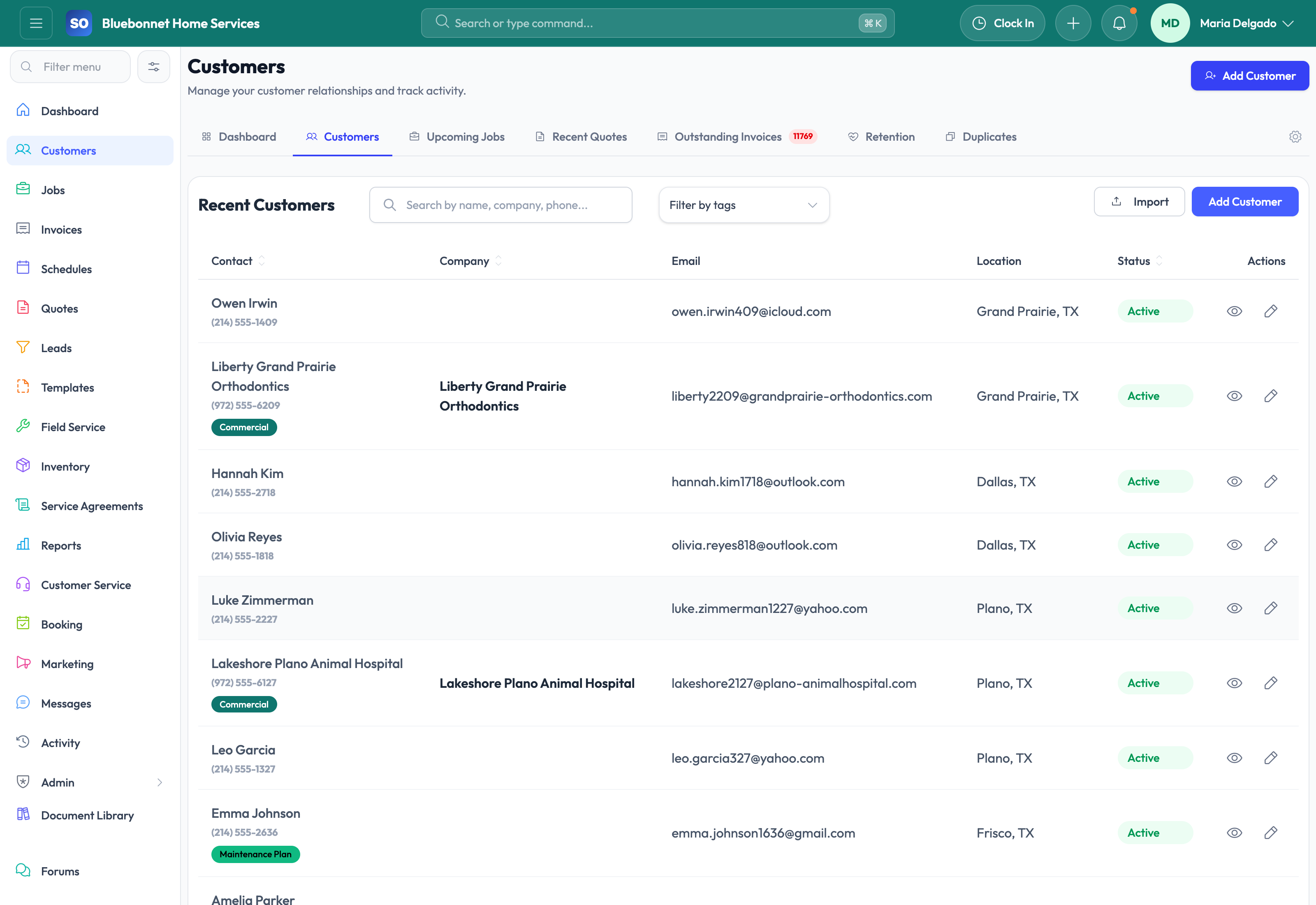
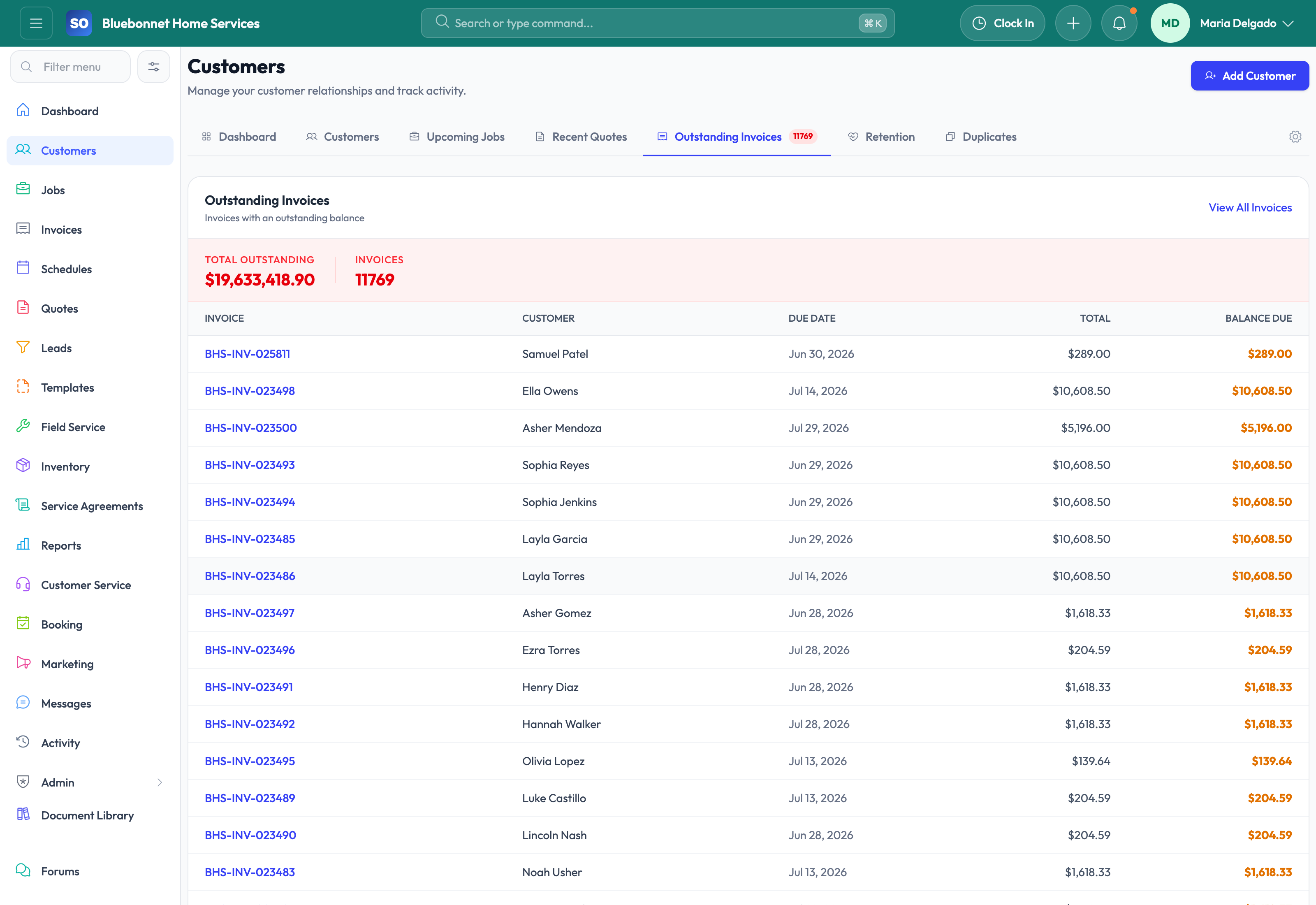
When a customer calls, your office can see the right property, equipment, past work, open quote, and balance in one record. Dispatch sends the tech with context. The customer does not have to tell the same story twice.
- Homeowners and commercial accounts
- Multiple properties and contacts
- Work and billing history together
Fewer avoidable mistakes
One record from the first call to final payment
The customer record follows the work. It is not a contact list that gets forgotten after the job is booked.
Before dispatch
Confirm the caller, service address, equipment, access notes, past work, and any unpaid balance.
On the job
Give the tech the history, site contacts, agreements, documents, and notes tied to that location.
After the work
Keep the invoice, payment, photos, messages, review, and next-service follow-up on the same account.
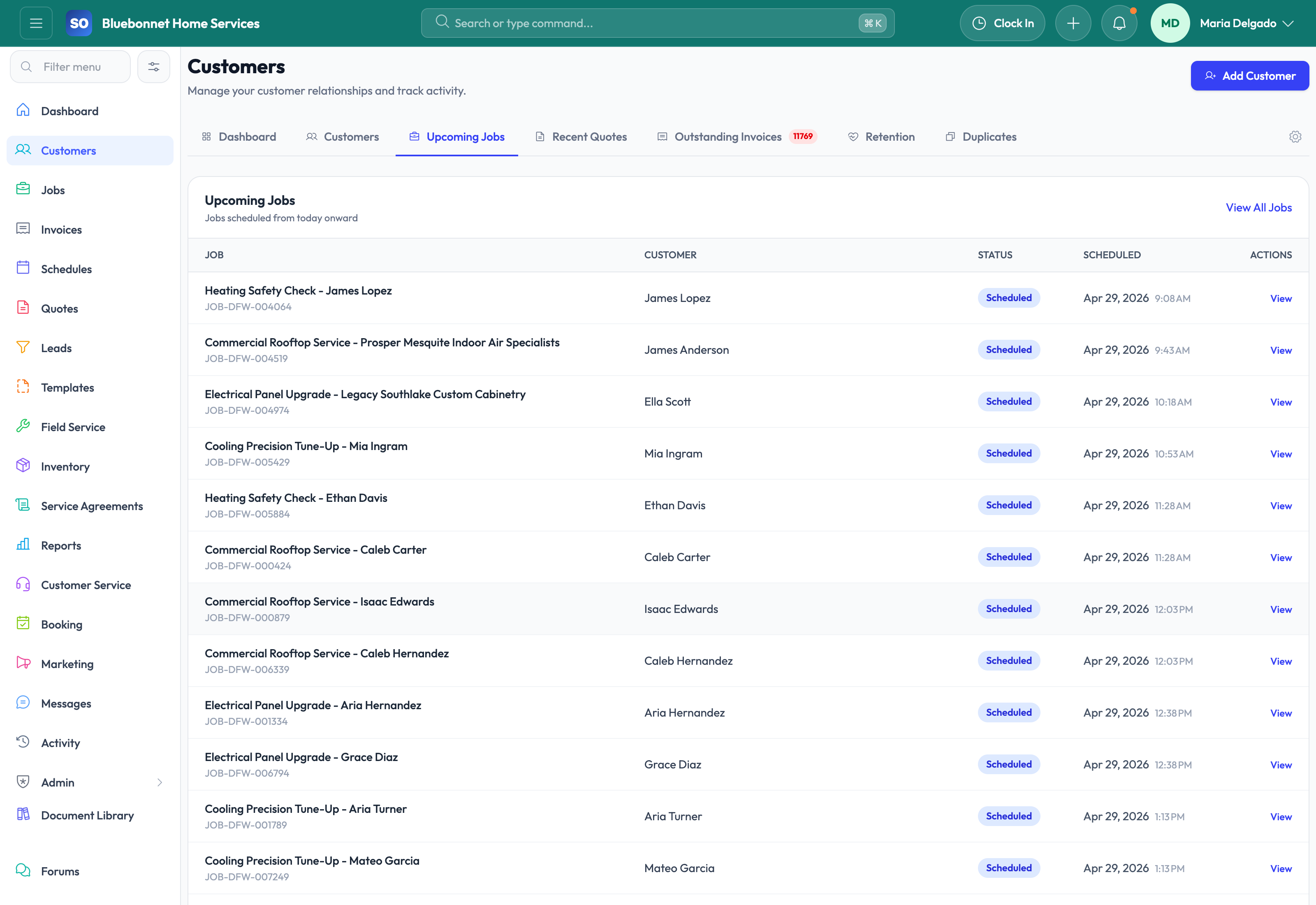
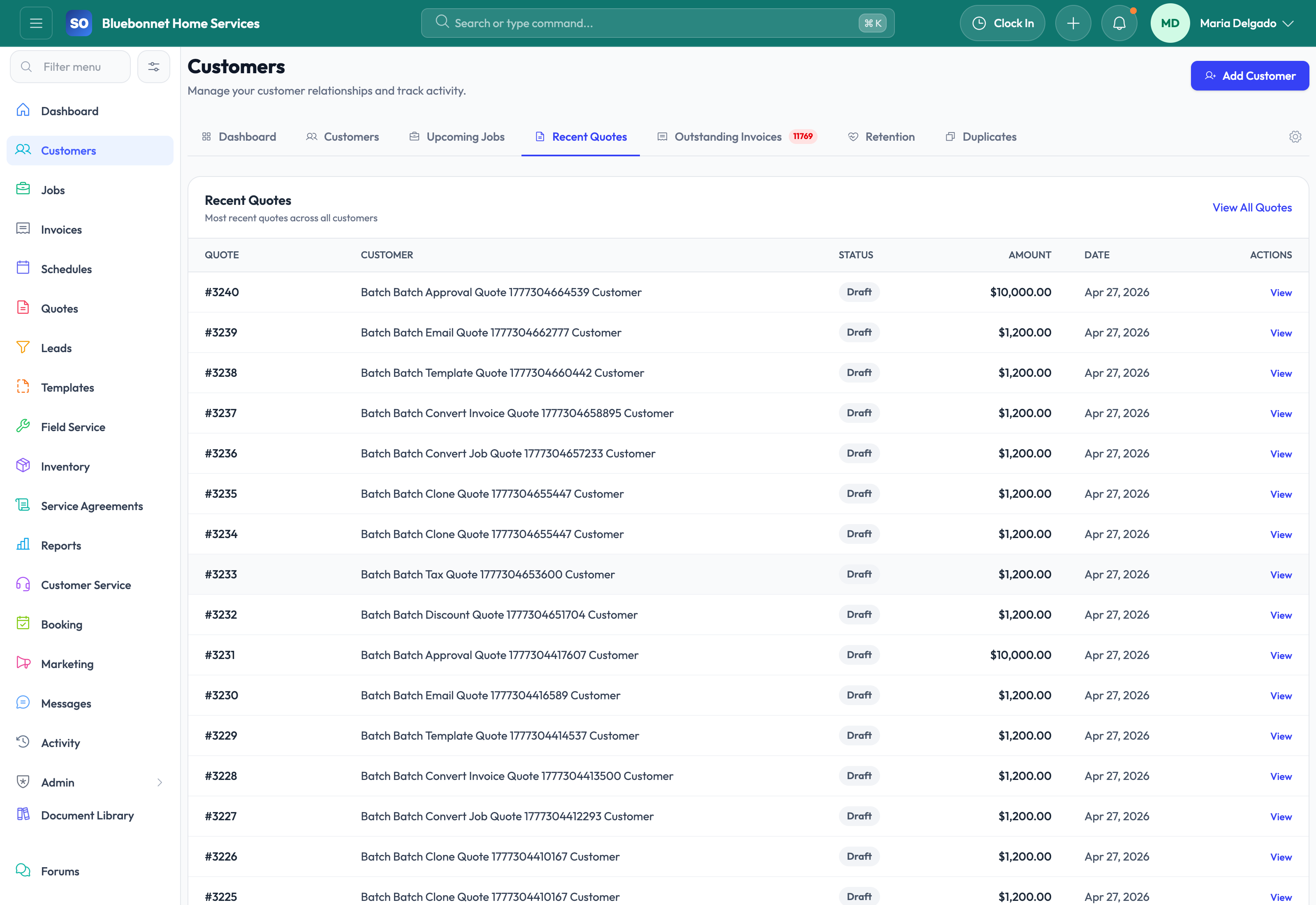
See the customer workspace
A clean handoff
The details survive every handoff
No side spreadsheet. No “ask Mike, he was there last time.” Each person adds to the same customer story.
-
1
Office
Find the right account
Match the caller to the correct contact, property, and piece of equipment.
-
2
Dispatch
Send useful context
Book the work with access notes, history, priority, and the right site contact.
-
3
Technician
Arrive prepared
See what was serviced, what was promised, and what the customer already knows.
-
4
Billing
Close the loop
Invoice the right party and leave a complete record for the next visit.
Everything where the team expects it
What stays with the customer
People and properties
Homeowners, tenants, property managers, billing contacts, service addresses, and site-specific notes.
Equipment and service history
Installed equipment, previous visits, repairs, documents, photos, and service agreements.
Jobs and schedule
Upcoming work, completed jobs, assigned technicians, and the details captured during each visit.
Quotes, invoices, and balances
Proposed work, approvals, open invoices, statements, credits, and payment history.
Notes, messages, and files
Call notes, text and email history, documents, preferences, and the promises your team made.
Follow-up and account cleanup
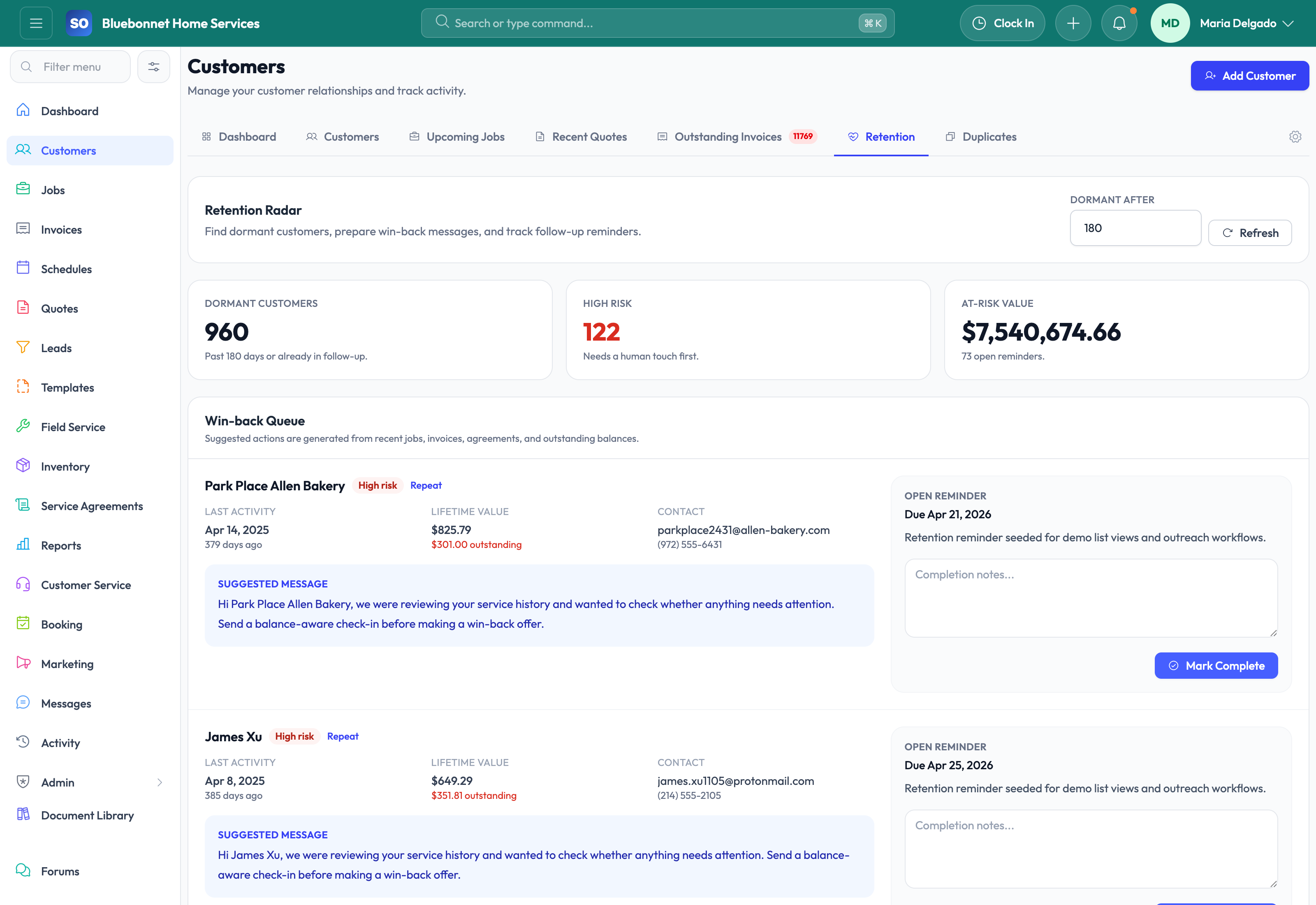
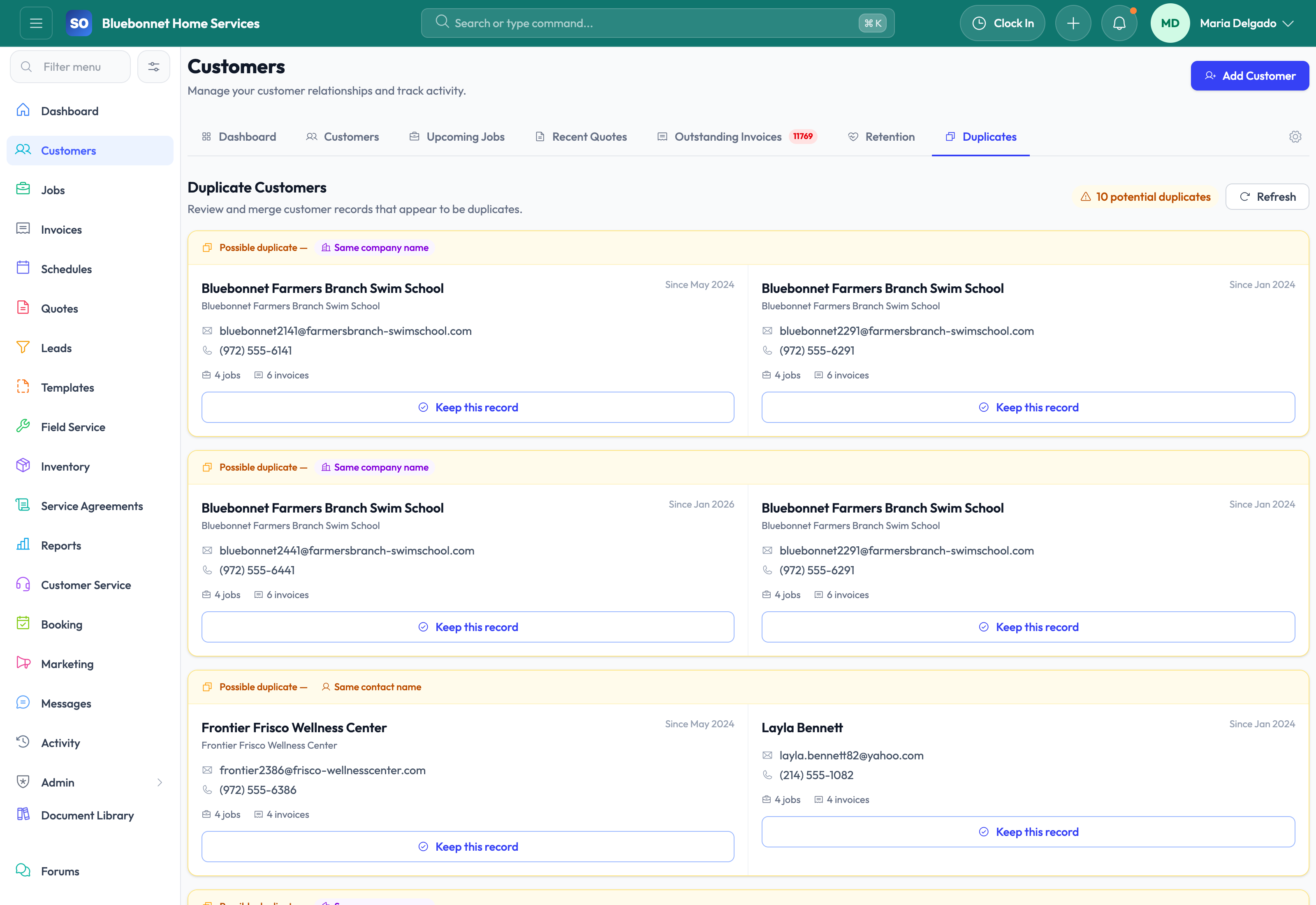
Reviews, retention signals, overdue follow-up, duplicate records, and relationships between accounts.
Built for the whole shop
Each person gets the part of the story they need
CSR
Recognize the caller and stop asking for information already on file.
Dispatcher
Send the right tech to the right place with fewer follow-up calls.
Technician
Know the equipment, history, access details, and customer expectations.
Office manager
See open work, sales opportunities, balances, and data that needs cleanup.
Keep the record useful
Three habits make it work
- Choose the right property. Tie every job and note to the location where the work happened.
- Name the right contact. Separate the person on site from the person approving or paying for the work.
- Leave the next person a useful note. Record what changed, what was promised, and what needs to happen next.
See it with your workflow
Stop making customers tell the same story twice.
Walk through a customer call from the office to dispatch, the field, and billing using the way your company works today.