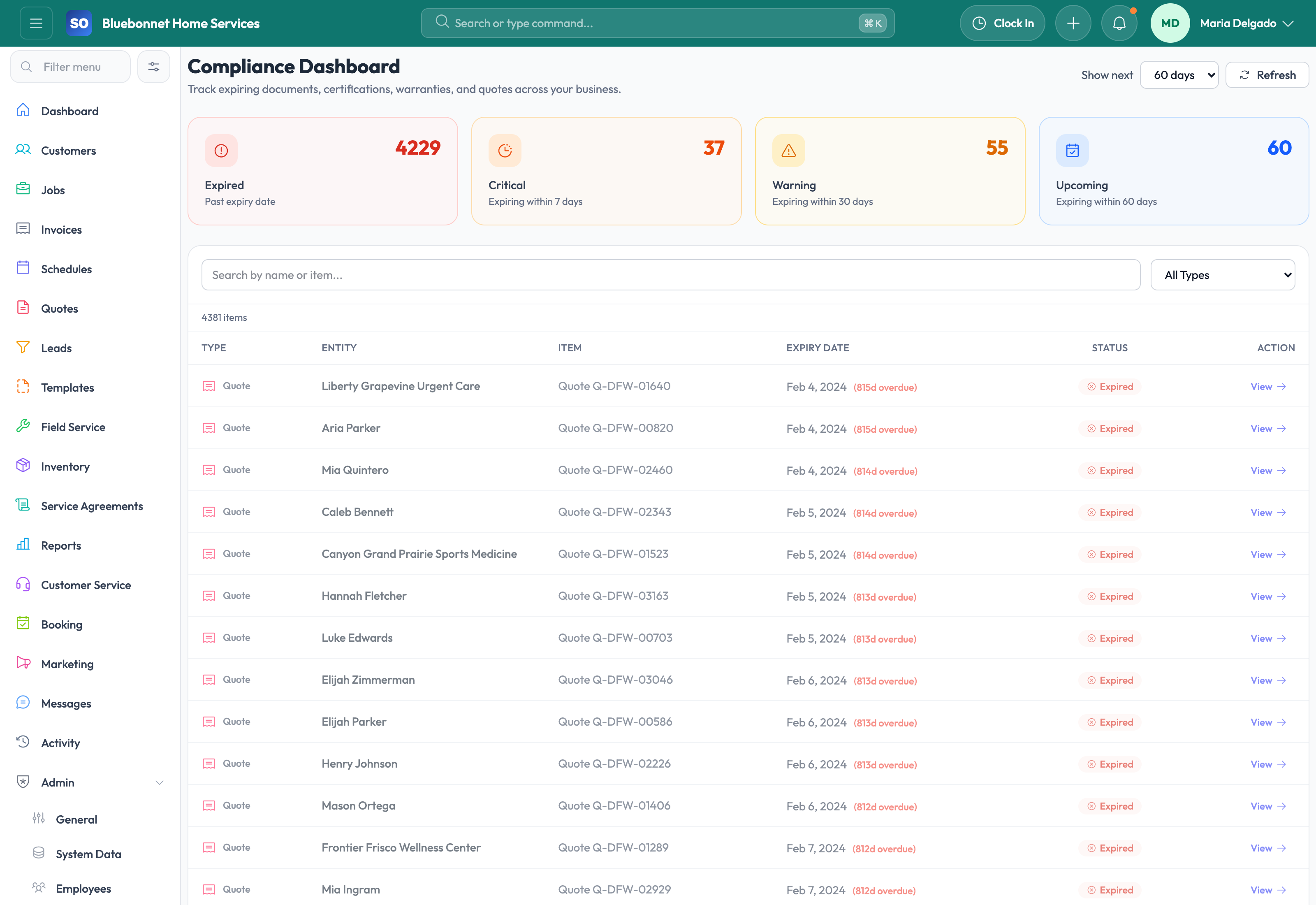
Keep certifications, expiring documents, safety issues, and partner requirements visible before they become operational risk.
See it in action
Compliance in the trades is often managed across several disconnected spreadsheets and filing systems until something expires or an incident forces the issue. Service Opus helps bring compliance back into daily operations by tying document expiry, certifications, workforce readiness, and incident records to the same platform that is already running jobs and scheduling.
Business Needs It Solves
Expiry visibility: Teams need early warning when certifications, warranties, quotes, or required documents are approaching expiration.
Safer dispatch decisions: Managers need to know whether the assigned employee or subcontractor is actually compliant for the work being sent out.
Better incident and training tracking: Safety issues and required follow-up should stay visible and connected to the right people and jobs.
Cleaner audit preparation: Evidence should already be organized before a customer, insurer, or regulator asks for it.
How Service Opus Helps
Cross-entity expiration dashboard: Surface expiring lead documents, job documents, employee certifications, employee skills, equipment warranties, and quotes from one compliance view.
Workforce readiness visibility: Track employee certifications, skills, and employee documents in the same system dispatchers and managers already use to assign work.
Safety incident records: Record incidents, severity, status, and job context so teams can review open issues and required follow-up.
Subcontractor and job compliance context: Keep required external documentation and job-linked compliance records closer to the work they affect.
Navigate back to the source record: Compliance issues stay actionable because the dashboard points teams back to the underlying employee, job, document, or quote.
What Better Compliance Visibility Changes
Compliance becomes far easier to manage when it is treated as a live operational signal instead of a filing exercise. Service Opus helps managers catch issues before they block work, expose risk, or create last-minute fire drills.
Operational habit: Review compliance dashboards before dispatching specialized, regulated, or higher-risk work so credential and document gaps surface early.