Turn completed work into cash faster with connected invoicing, payment collection, reminders, receipts, and receivables visibility.
See it in action
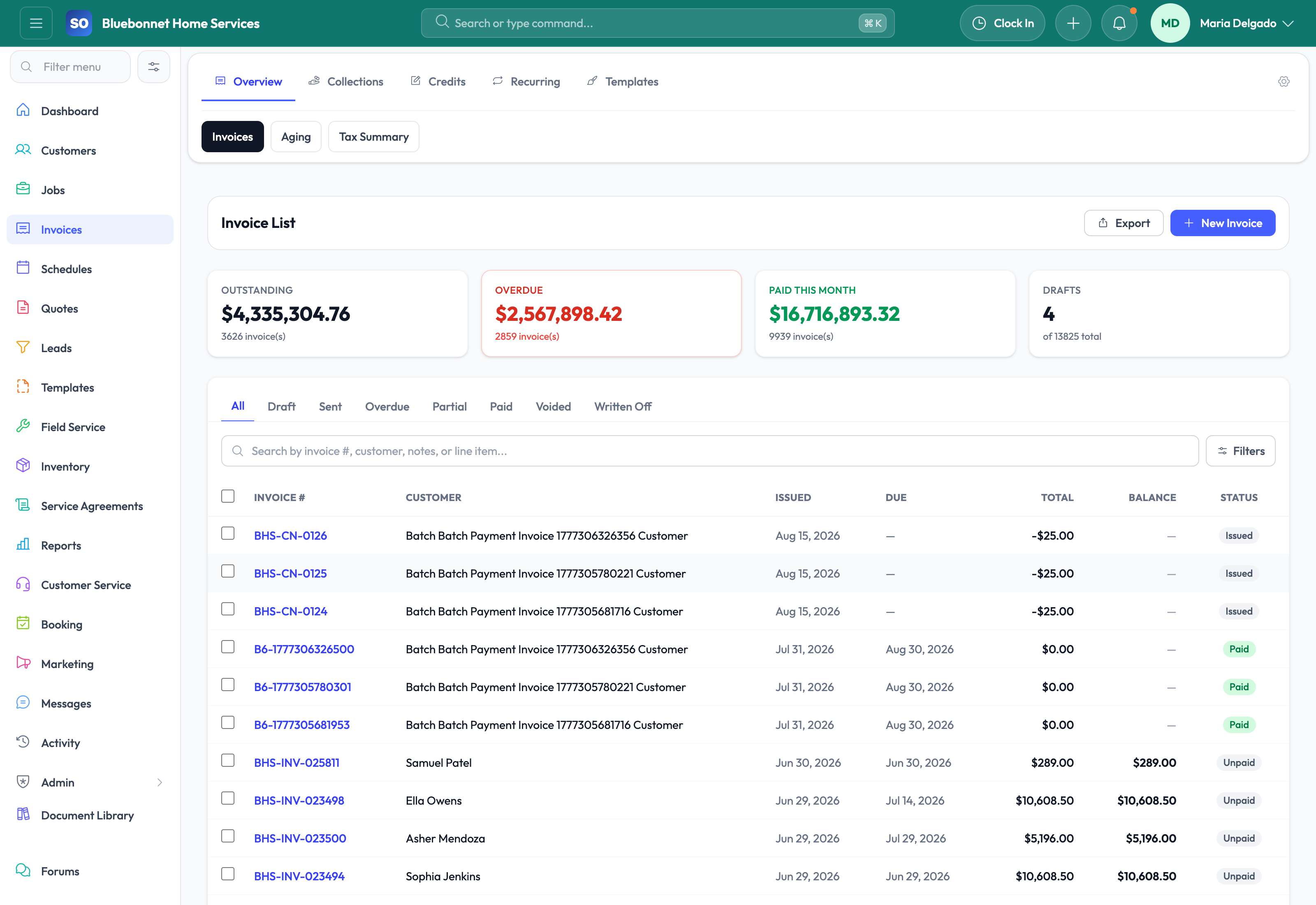
Cash flow problems often come from slow handoff, not just slow customers. If completed work sits unbilled, invoices go out without clear payment options, or overdue balances have no structured follow-up, revenue gets harder to collect. Service Opus connects billing to the job, customer, payment, and collections workflow so office teams can move from completed work to collected cash with less friction.
Business Needs It Solves
Faster billing handoff: Jobs and quotes should become invoices without re-entering scope, pricing, or customer information.
Better customer payment experience: Invoices need clear delivery, secure payment links, receipt handling, and easier self-service for payment.
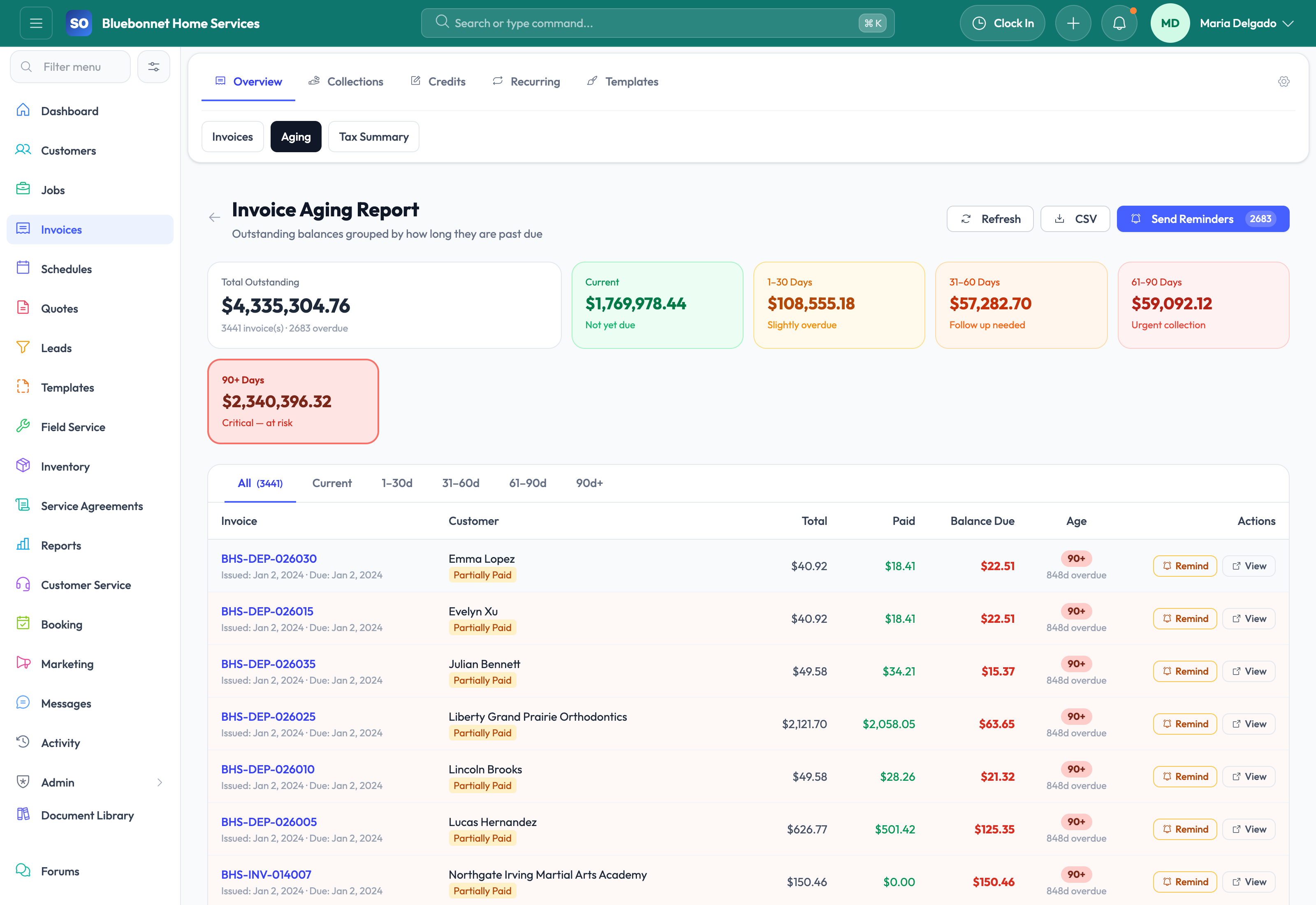
Receivables control: Office teams need aging visibility, reminders, dunning rules, and collection tasks instead of reactive chasing.
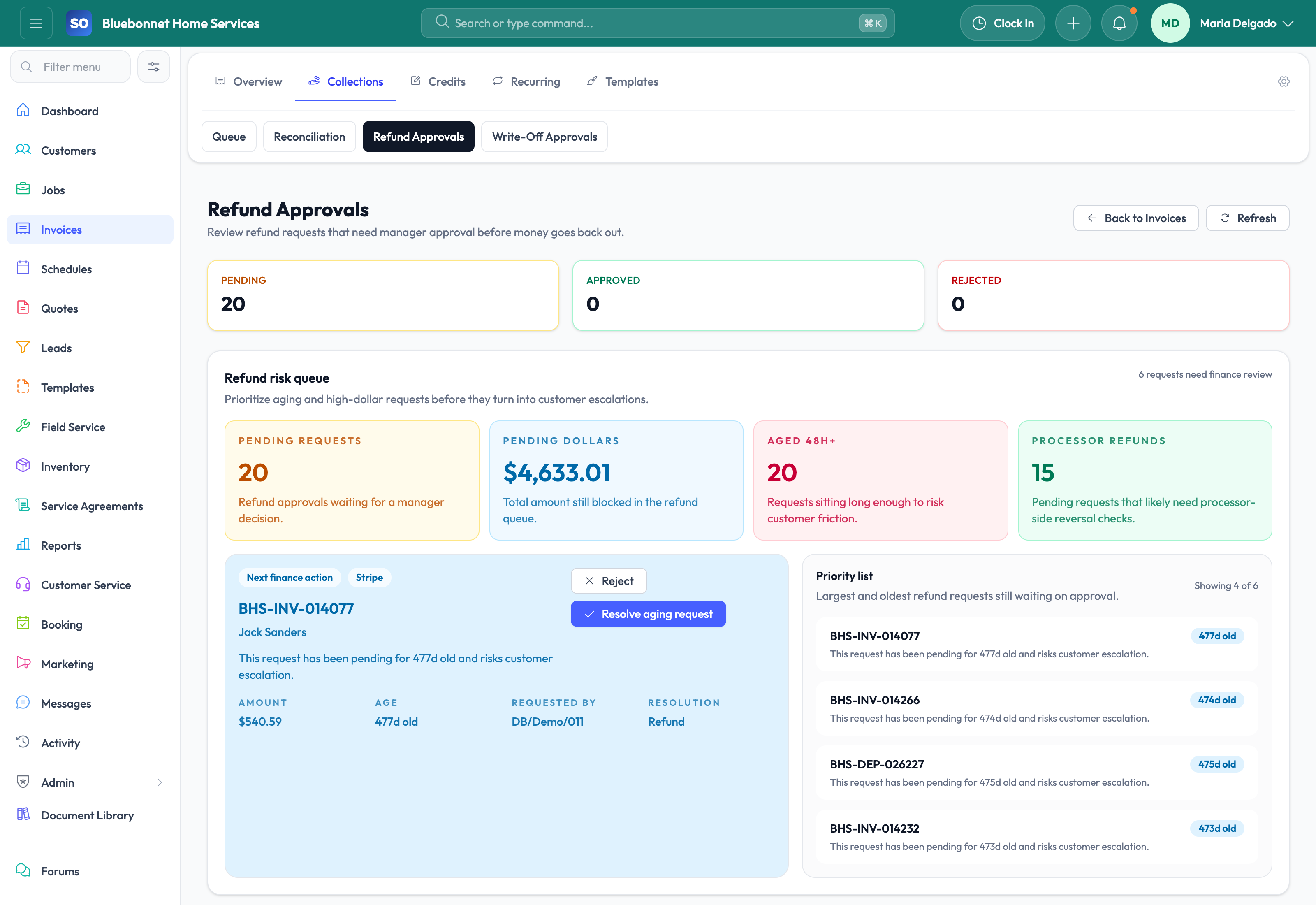
Flexible payment operations: Partial payments, credits, payment plans, refunds, and autopay options need to be visible and manageable.
How Service Opus Helps
Invoice generation from work already done: Create invoices from jobs or quotes so line items, totals, and customer linkage carry forward cleanly.
Templates, numbering, and branded delivery: Use invoice templates, previews, numbering rules, PDF generation, and branded email delivery for a more professional billing experience.
Secure payment links and portal checkout: Generate customer-facing payment links from invoices and support Stripe-powered portal payments for connected companies.
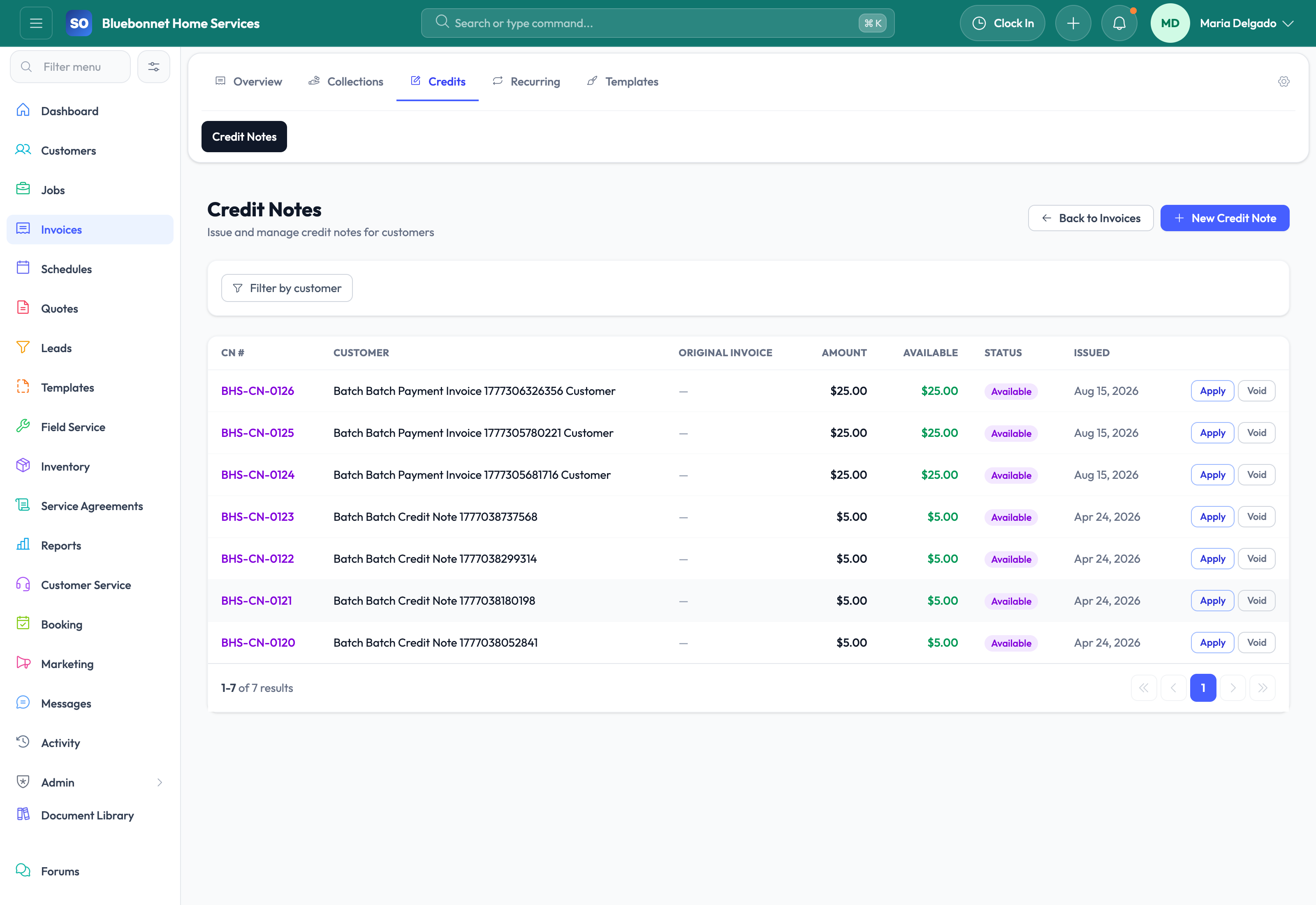
Payment recording and balance tracking: Manage partial payments, payment history, available credit, credit application, and invoice status as money comes in.
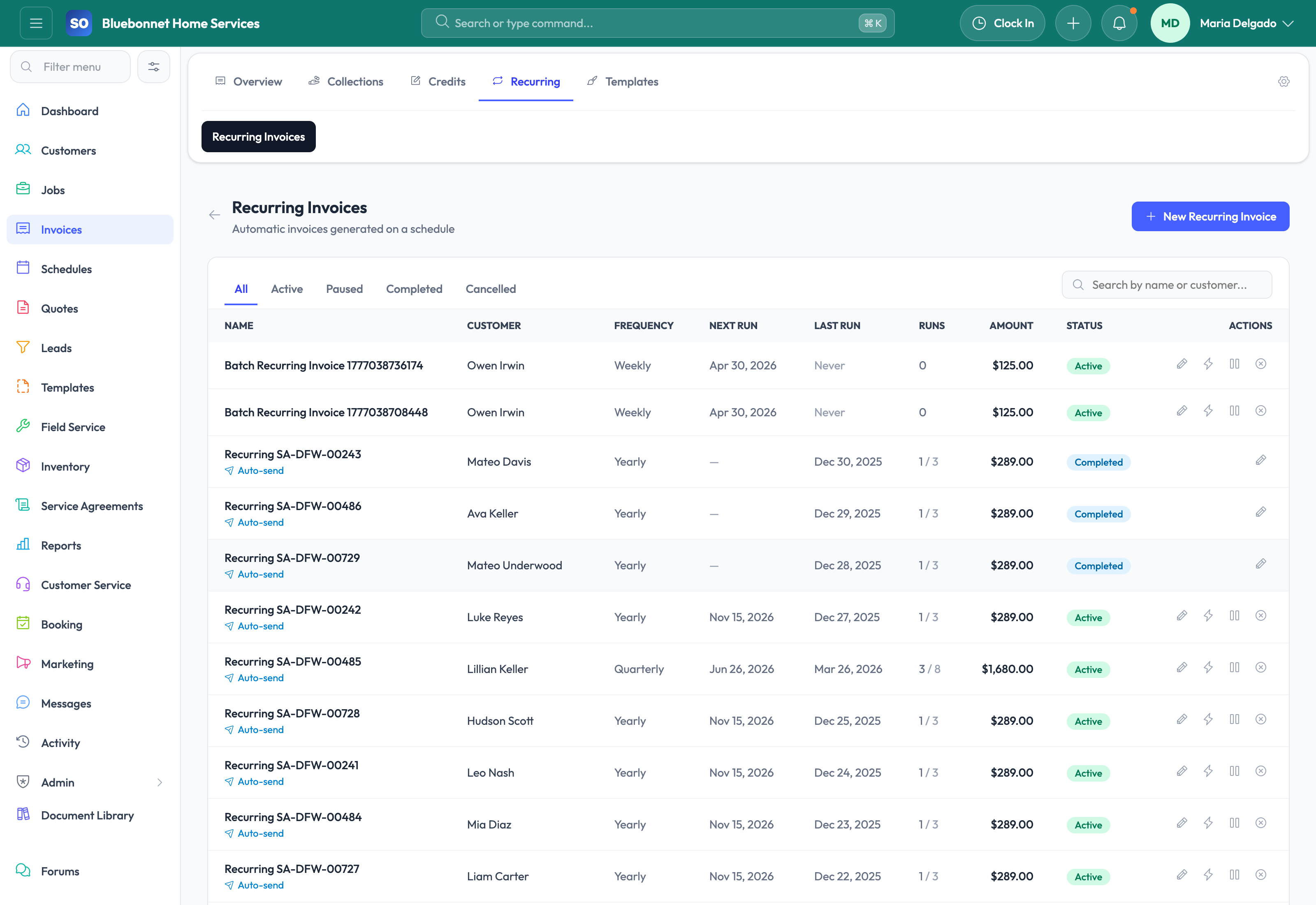
Payment plans, saved cards, and autopay: Support installment schedules and Stripe-backed saved-card or autopay workflows where payment configuration is enabled.
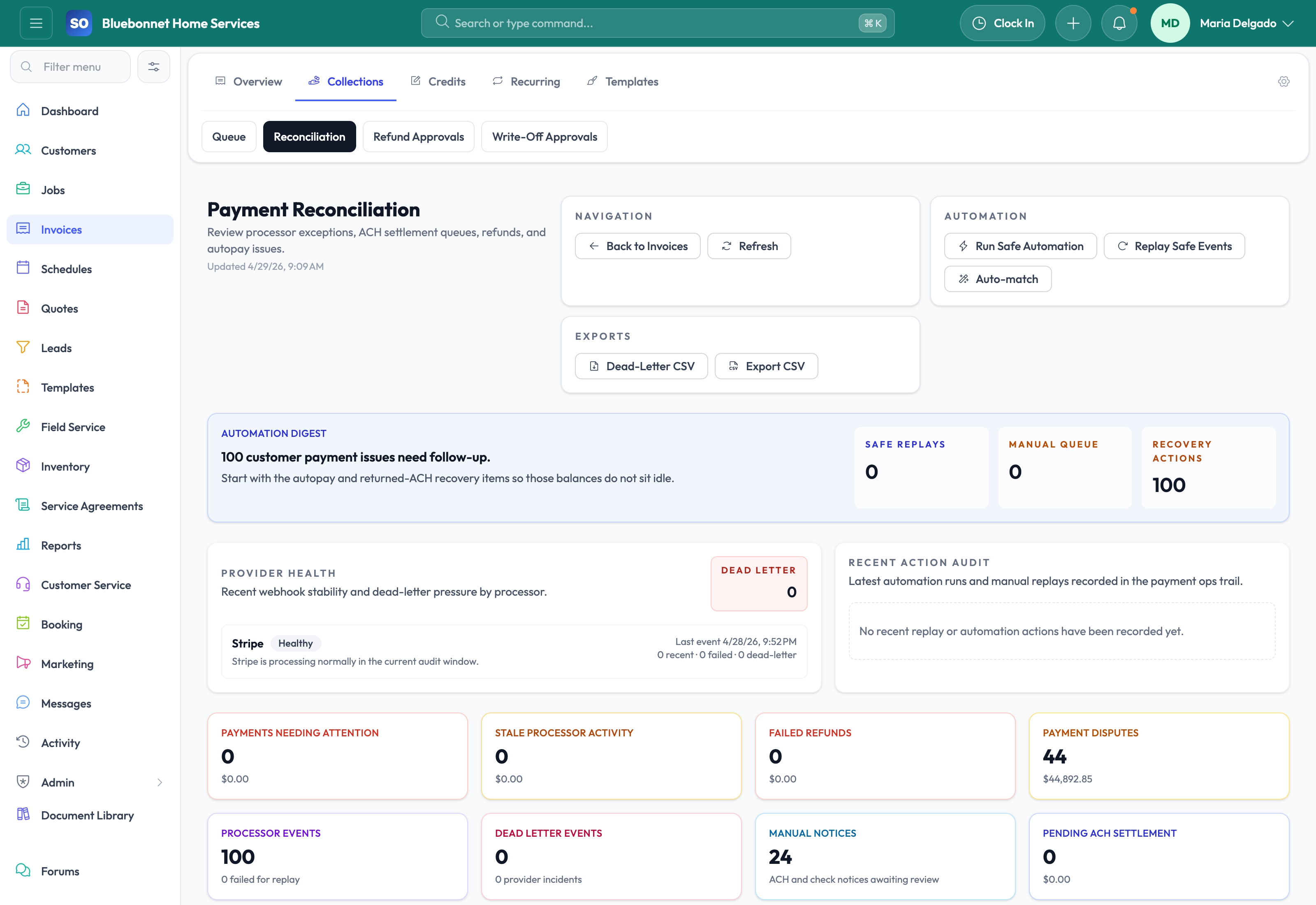
Receipts and refunds: Email receipts, support downloadable receipt documents, and manage reversal or refund flows with Stripe-backed reconciliation where applicable.
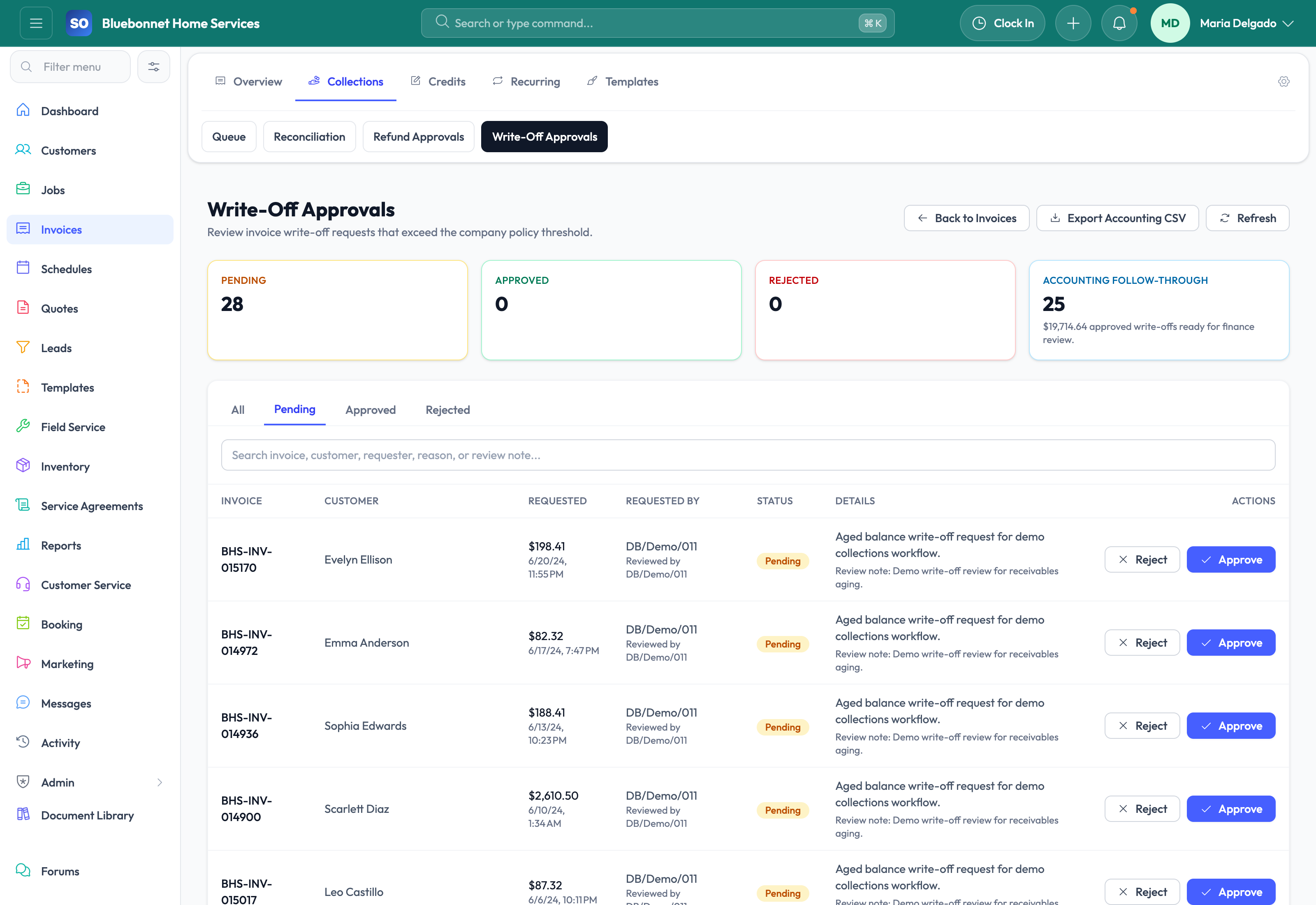
Aging and collections workflows: Use aging reports, reminder runs, dunning rules, customer statements, and collection tasks to keep overdue balances visible.
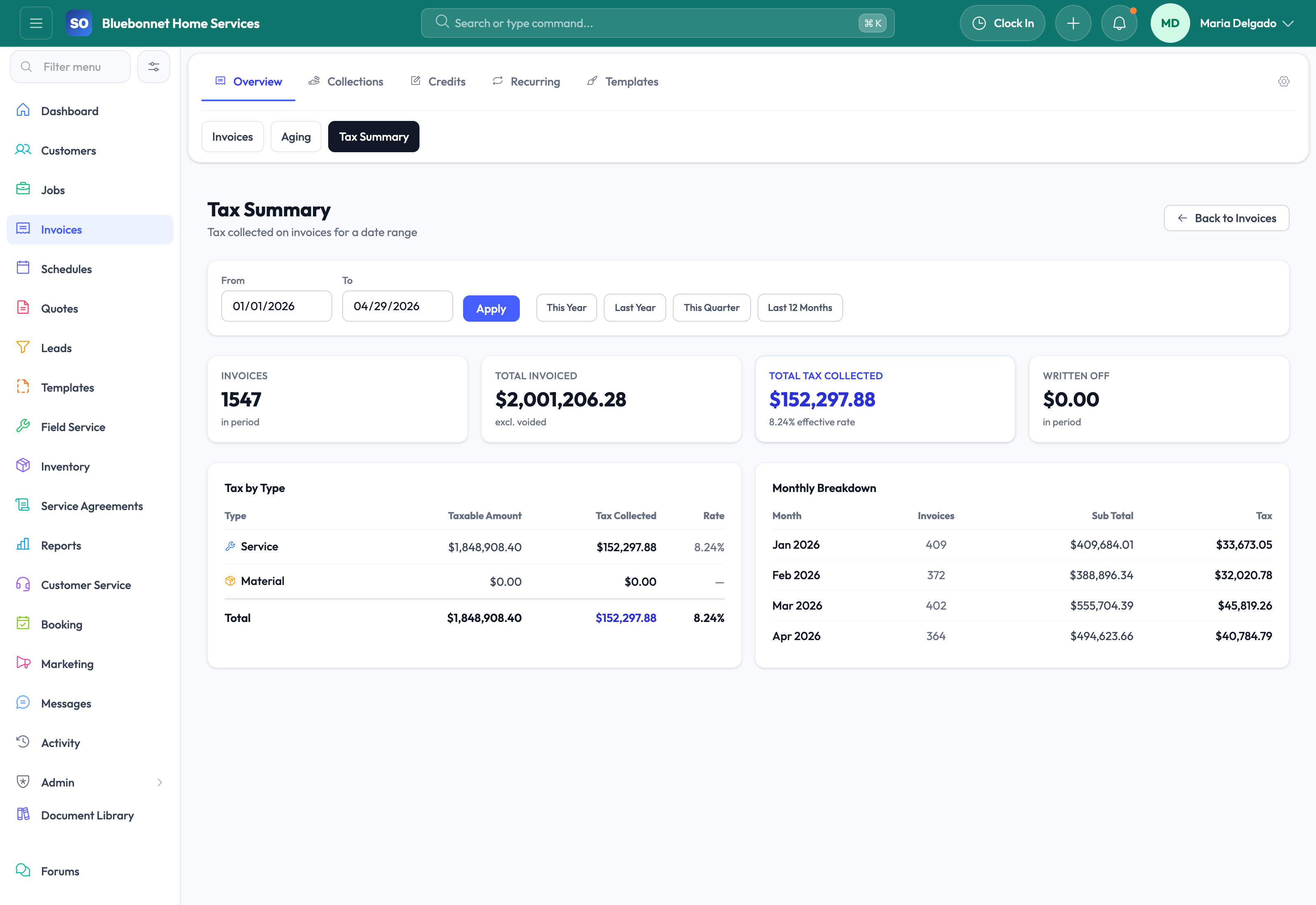
Accounting-aware billing: See export readiness, sync status, and accounting guidance so invoicing and payment records stay easier to reconcile downstream.
What Strong Billing Operations Look Like
With Service Opus, billing becomes part of the operating workflow instead of a separate clean-up exercise. Office staff can invoice sooner, customers get clearer payment paths, and managers gain a better view of what is collected, what is aging, and what needs intervention before receivables become a bigger risk.
Closest related guides: Pair this area with Job Management for billing handoff, Accounting for export readiness, and Customers for statement and balance visibility.
User Guide
Convert completed work into accurate invoices, monitor receivables, and collect payments faster.
Best For
Office and billing teams preparing invoices.
Managers watching aging, write-offs, credits, and refunds.
Owners tracking cash-flow risk.
Before You Start
Configure invoice numbering, tax behavior, payment terms, payment methods, and late fee rules.