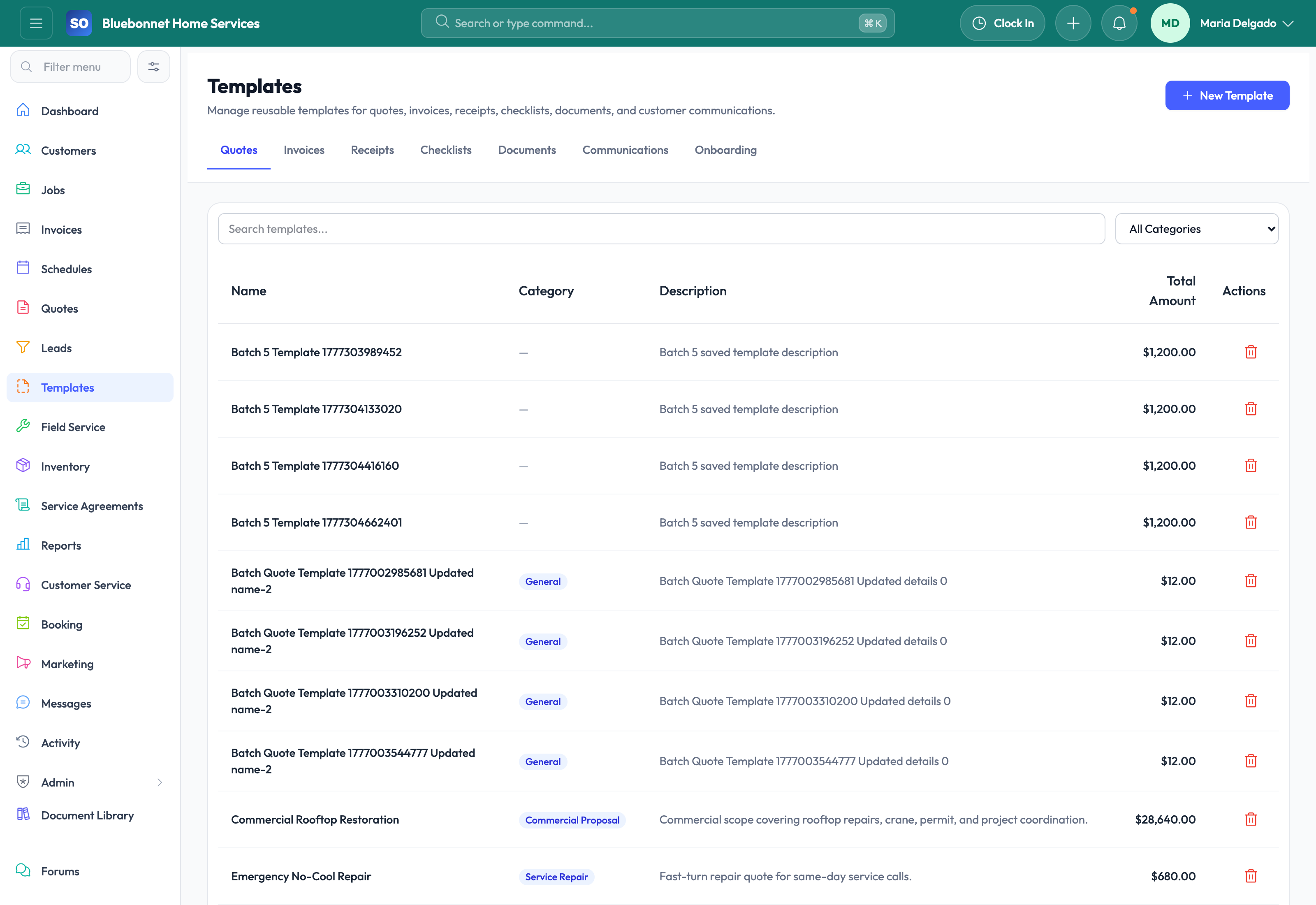
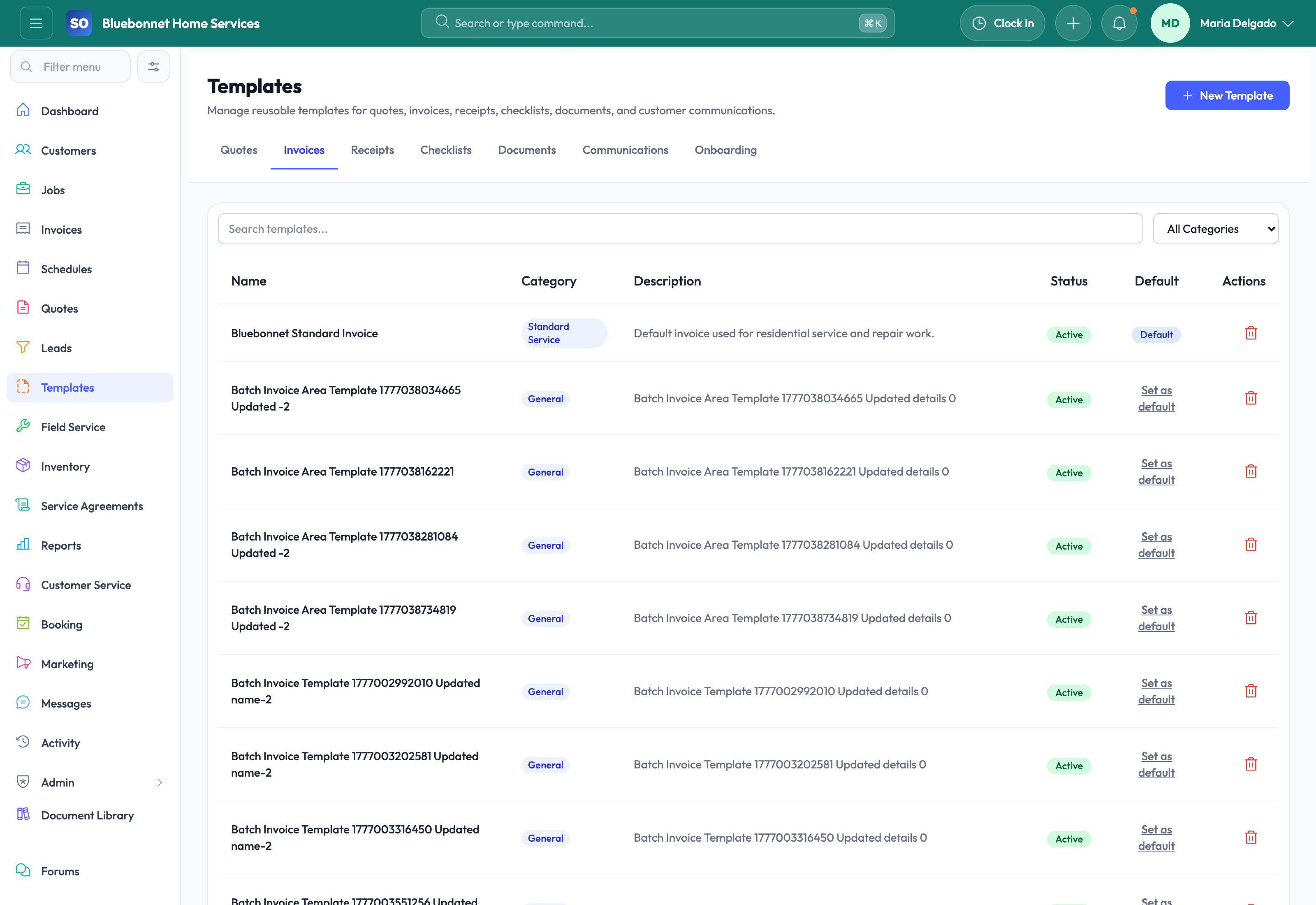
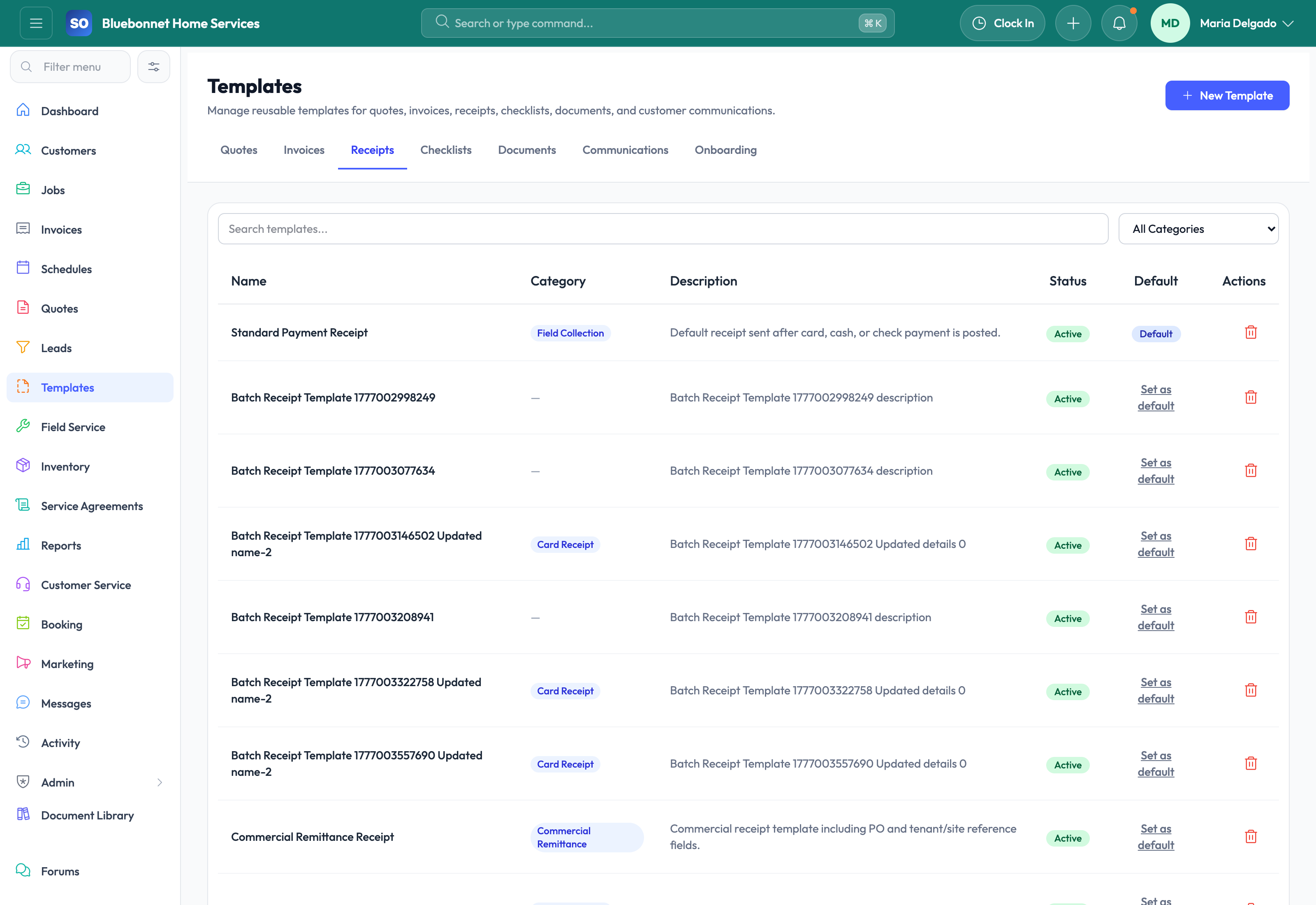
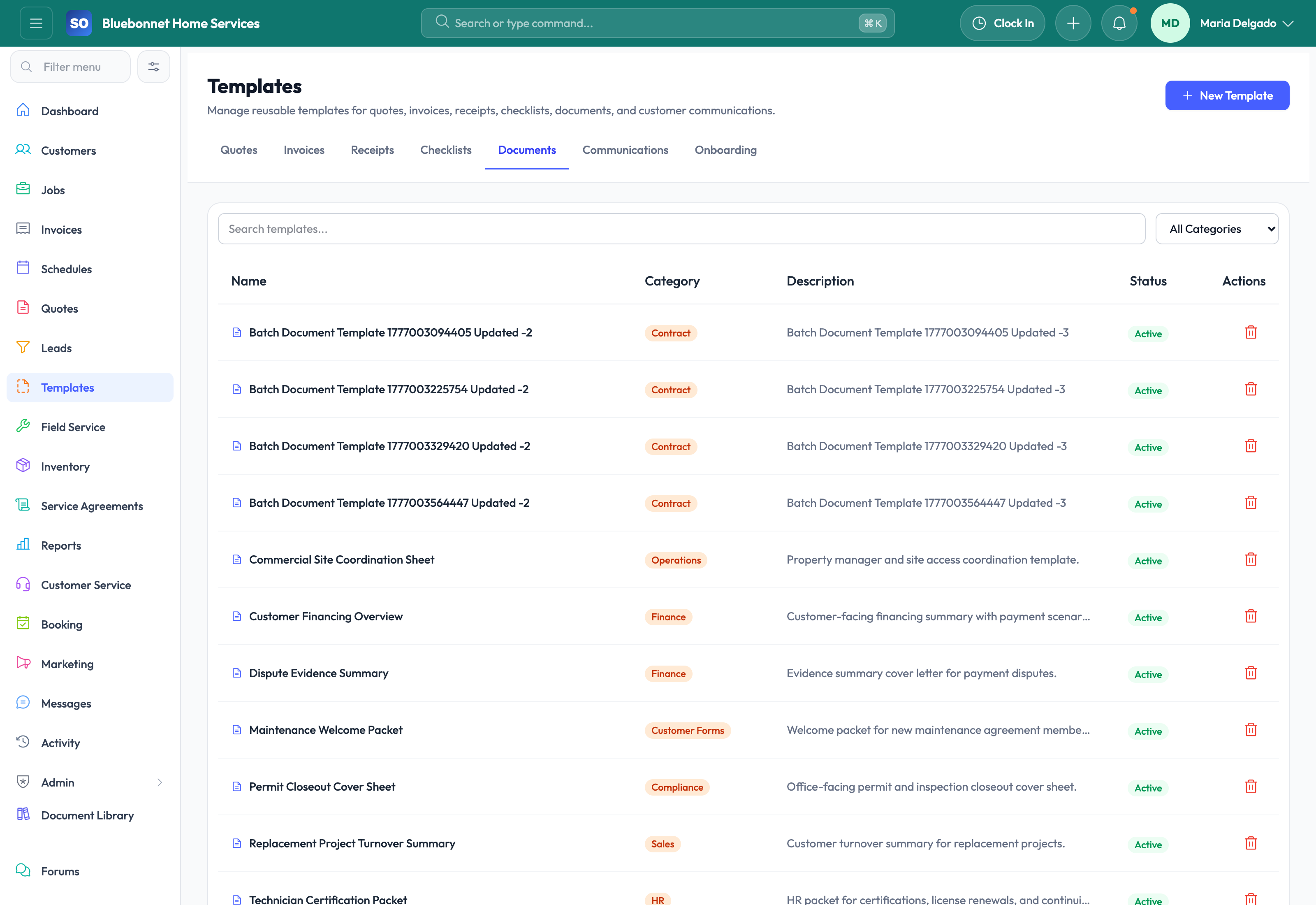
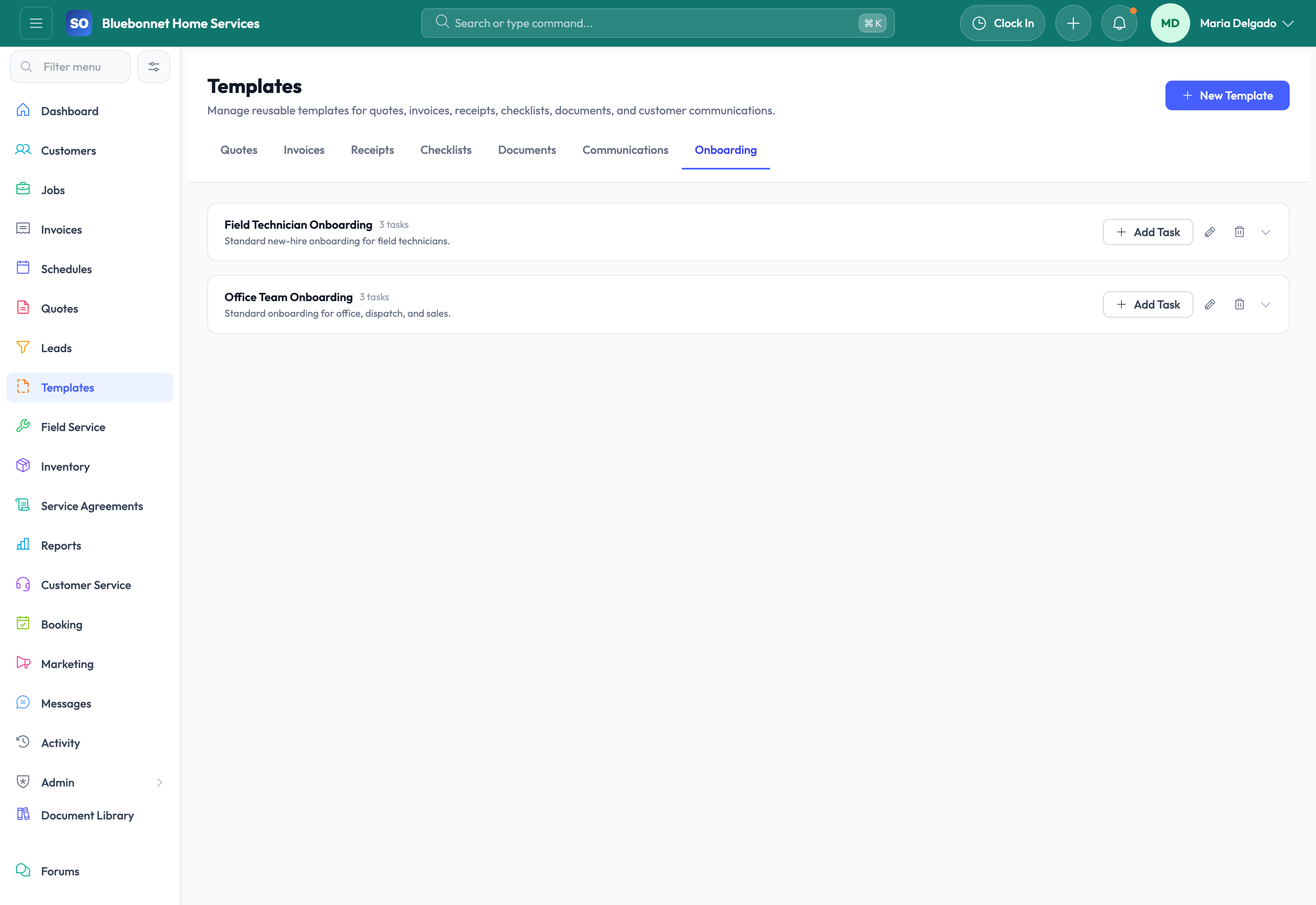
Turn the work your team repeats every week into reusable starting points so output stays consistent and setup gets faster.
See it in action
Templates matter because growth creates repetition. The same scope language, invoice layout, checklist steps, onboarding tasks, and customer documents get rebuilt again and again unless the business standardizes them. Service Opus helps convert those repeatable pieces into reusable templates so your team can move faster without sacrificing consistency.
Business Needs It Solves
Less rework: Staff should not rebuild standard quote scope, invoice formatting, or checklist structure from scratch every time.
More consistent customer output: Proposals, invoices, and documents should reflect the same brand and operational standards across the team.
Faster onboarding and training: Repeatable internal processes are easier to teach when they already exist as templates.
Cleaner process control: Updating one template is easier than retraining the whole team every time a standard changes.
How Service Opus Helps
Quote templates: Reuse scope, pricing structure, packages, and proposal sections for common jobs.
Invoice templates: Standardize invoice layout, preview behavior, and default presentation across billing workflows.
Checklist templates: Capture repeatable quality, safety, maintenance, or inspection steps and assign them to jobs as needed.
Document templates: Generate customer-facing documents using merge fields tied to live company, customer, lead, or job data.
Onboarding templates: Give HR and managers a reusable structure for new-hire tasks instead of starting fresh each time.
Why Templates Matter Commercially
Templates help smaller teams operate more professionally and help larger teams stay consistent as more people touch quoting, billing, compliance, and onboarding. Service Opus treats templates as an operational tool, not just a formatting convenience.
Maintenance: Review templates whenever pricing, branding, policies, inspection standards, or onboarding expectations change so the reusable version stays trustworthy.
User Guide
Create reusable content that keeps quotes, invoices, receipts, documents, and onboarding consistent.
Best For
Admins standardizing repeatable content.
Sales and billing teams using approved wording and layouts.
HR and operations teams creating onboarding or document packets.
Before You Start
Identify high-volume documents and messages that should not be recreated manually.
Confirm approved language for legal terms, exclusions, payment terms, and customer instructions.
Decide who can create, edit, approve, and retire templates.
Recommended Workflow
Choose the template type: quote, invoice, receipt, document, or onboarding.
Build content with reusable sections, default wording, and required fields.
Test the template with a real customer, quote, invoice, or employee example.
Publish templates for approved use and retire outdated versions.
Review template performance when workflows change or errors repeat.
Review Checklist
Templates use approved pricing, terms, tax wording, and customer instructions.
Version changes are intentional and documented.
Users know which template applies to each situation.
Retired content is not used for new work.
Common Handoffs
Quotes and Estimating for sales proposal templates.
Invoicing and Payments for billing and receipt templates.
Documents and Media for reusable files.
HR and Employees for onboarding templates.
Ready to apply this workflow?
Use the guide to evaluate fit, then start a trial or talk through how Service Opus maps to your team, trade, and current operating process.