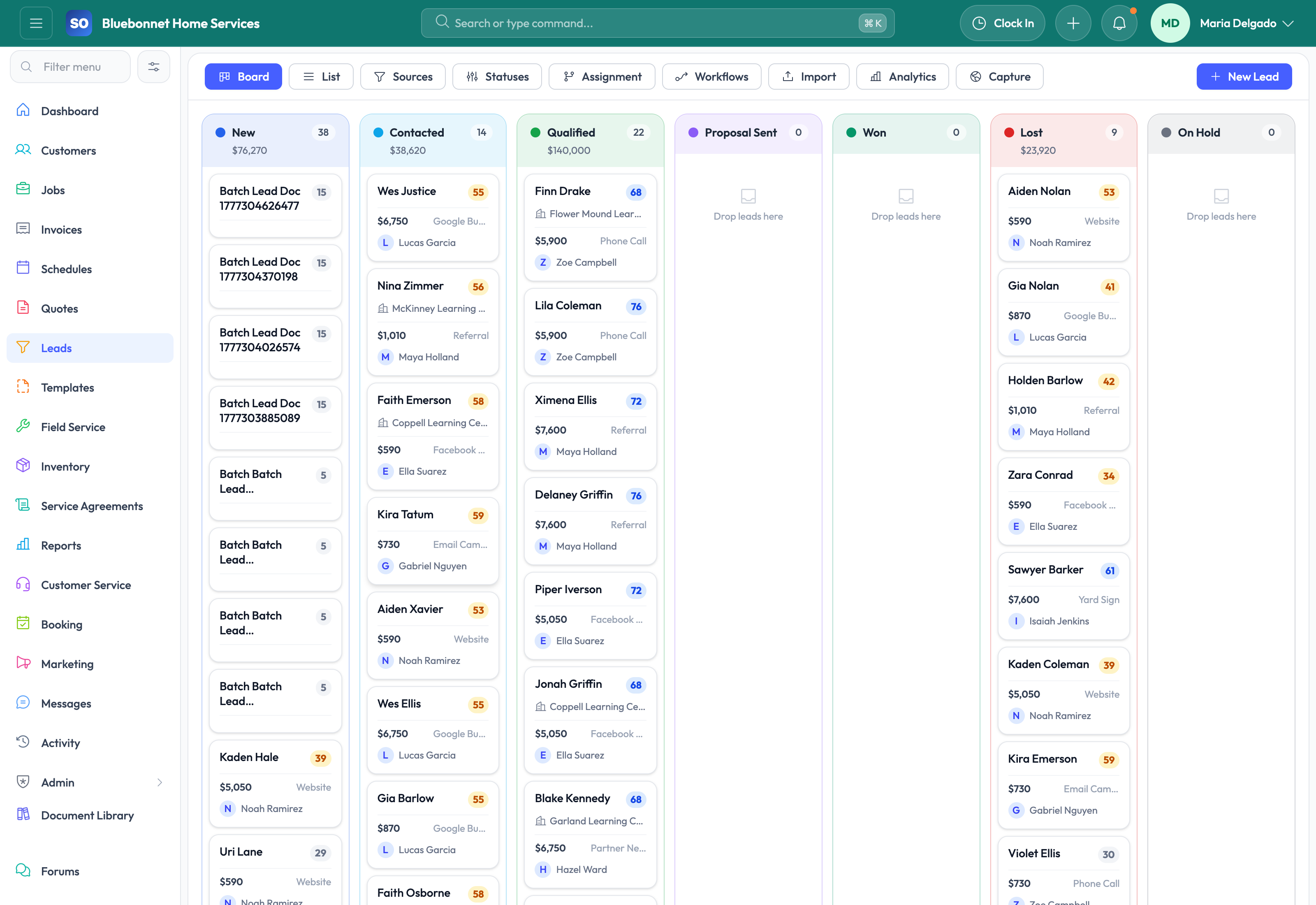
Capture every opportunity, assign it quickly, and make follow-up visible enough that good work does not die in the pipeline.
See it in action
Trades businesses often lose revenue long before scheduling becomes the problem. The breakdown usually happens earlier: a website form is missed, a phone inquiry is not followed up, a rep forgets the next step, or no one can tell which lead sources are actually producing sold work. Service Opus gives you a lead system that is simple enough to use daily but structured enough to improve conversion discipline.
Business Needs It Solves
Capture demand consistently: Make sure every inquiry from web forms, referrals, phone calls, or manual entry lands in one visible pipeline.
Assign clear ownership: New opportunities should automatically land with the right person or team instead of sitting in a general queue.
Keep follow-up from slipping: Sales activity, tasks, notes, documents, and status changes need to stay attached to the lead.
Measure marketing effectiveness: Track which sources generate volume, quality, pipeline value, and wins so your spend decisions improve over time.
How Service Opus Helps
Visual pipeline management: Leads can be organized through customizable statuses and viewed in a Kanban-style board or list view.
Lead scoring and prioritization: Service Opus scores leads using factors like completeness, value, source, and ownership so stronger opportunities stand out faster.
Assignment rules: Route leads automatically by source or distribute them across a round-robin pool when no direct match exists.
Follow-up tasks and activity history: Calls, emails, meetings, notes, and next steps stay on the lead record so anyone can see what happened and what is next.
Lead documents and duplicate review: Attach files, detect duplicate prospects by email or phone, and merge records to keep the pipeline clean.
Public lead capture: Embed a Service Opus capture form on your website or post directly to the public capture endpoint so inbound demand flows straight into the pipeline.
Lead analytics: Review total leads, pipeline value, win rate, source performance, and assignee results over any date range.
What Good Lead Management Changes
A solid lead process does more than create a nicer board. It shortens response time, reduces missed follow-up, improves accountability across reps, and helps owners see whether growth problems are caused by lead volume, lead quality, quoting speed, or sales execution. If your team is currently managing demand through a shared inbox or spreadsheet, this module creates immediate operational structure.