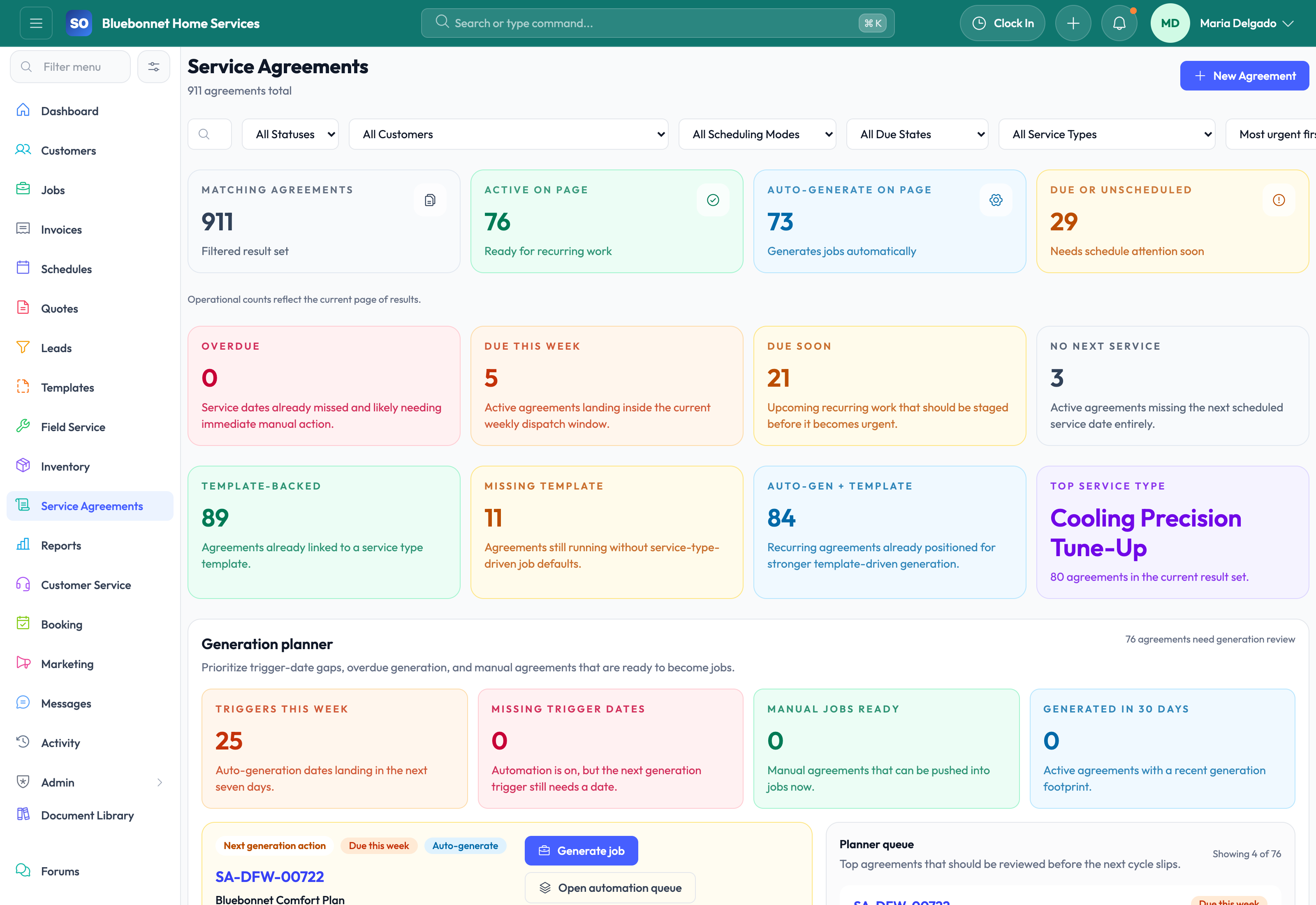
Build recurring revenue, keep maintenance commitments visible, and generate proactive work before customers have to call you again.
See it in action
Recurring service is one of the healthiest revenue streams a trades business can build, but it falls apart when agreement terms, renewal dates, billing cycles, and next-service timing live in spreadsheets or memory. Service Opus gives service agreements their own workflow so recurring maintenance becomes manageable and operationally useful.
Business Needs It Solves
Recurring revenue control: Track which customers are on active plans, what they are entitled to, and when that coverage renews or ends.
Proactive maintenance execution: Planned visits should turn into actual scheduled work without someone having to remember every due date.
Customer retention: Active agreements are a major indicator of account health and future service opportunity.
Consistency across office and field: Dispatch, customer service, and technicians all need to know what coverage exists before a visit is quoted or scheduled.
How Service Opus Helps
Agreement records with real detail: Track agreement number, customer, equipment, service type, status, start date, end date, renewal date, billing cycle, price, and terms.
Next-service visibility: Keep the next planned service date visible so proactive maintenance does not rely on manual reminders.
Recurring job generation: Agreements can generate maintenance jobs manually or through background automation when service dates come due.
Customer-level context: Agreements are visible from the customer record so office staff can confirm coverage during service calls, quoting, or collections conversations.
Operational linkage: Agreement-driven jobs can inherit service-type context and support a cleaner handoff into scheduling and job execution.
Retention insight: Active and expired agreement status contributes to customer-health and win-back decisions.
Why This Matters Commercially
Service agreements help convert unpredictable service demand into planned recurring work. With Service Opus, agreements are not just stored contracts. They become an operational engine for maintenance scheduling, renewal awareness, and customer retention across the business.
Tip: Keep agreement status, renewal timing, and next-service dates current so Customers, Jobs, Scheduling, and retention workflows all reflect the same reality.
User Guide
Manage recurring service commitments, renewals, planned visits, and agreement-backed customer value.
Best For
Office teams creating and maintaining maintenance agreements.
Dispatchers planning recurring service visits.
Managers tracking renewals, coverage, and agreement profitability.