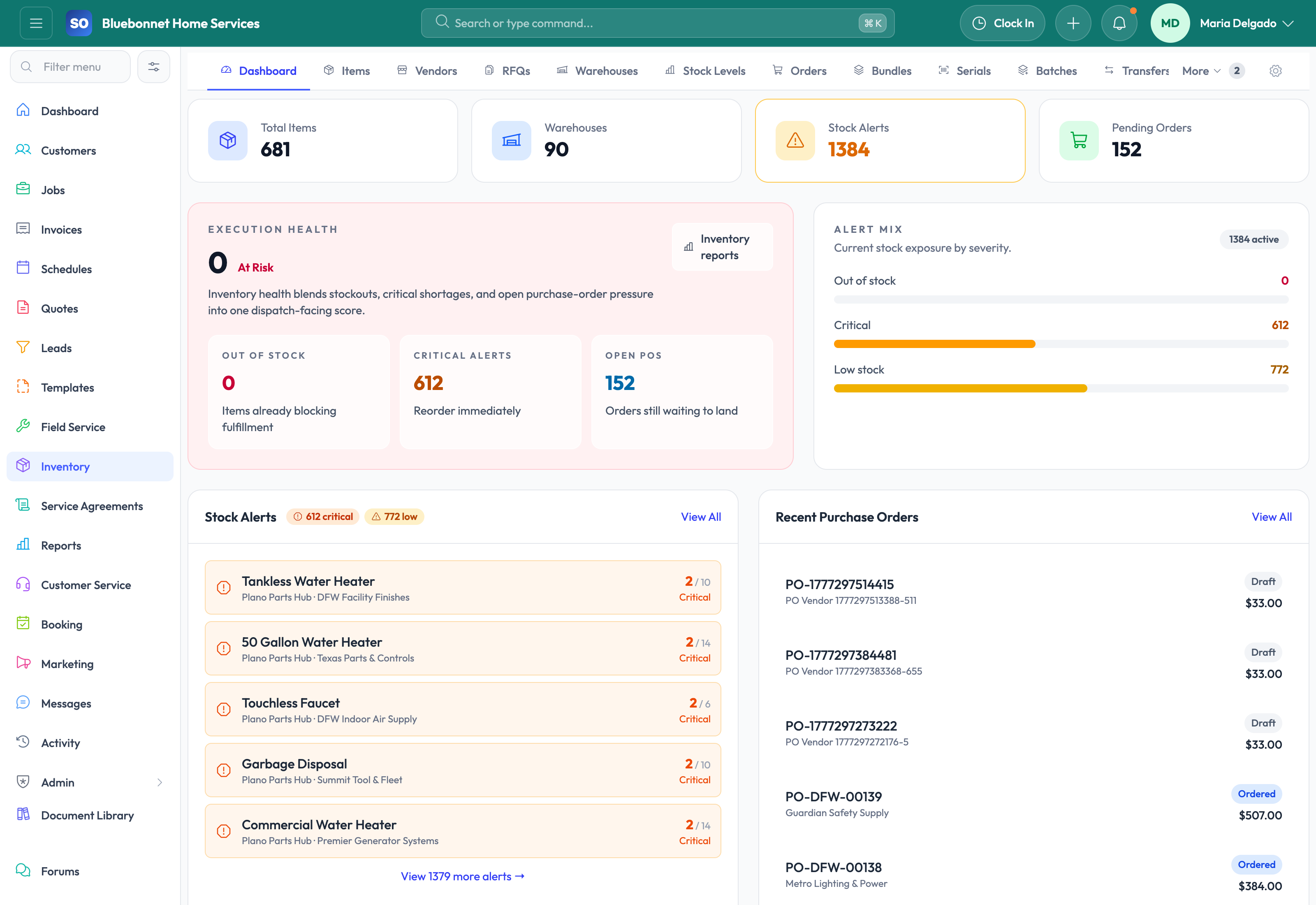
Know what stock you have, where it is, what it is reserved for, and what needs to be reordered before jobs get delayed.
See it in action
Inventory matters most when it protects the schedule. If stock is inaccurate or invisible, crews arrive without the right parts, purchasing becomes reactive, and job profitability gets harder to trust. Service Opus gives service businesses a connected inventory workflow across shops, trucks, purchase orders, job reservations, receiving, and reporting.
Business Needs It Solves
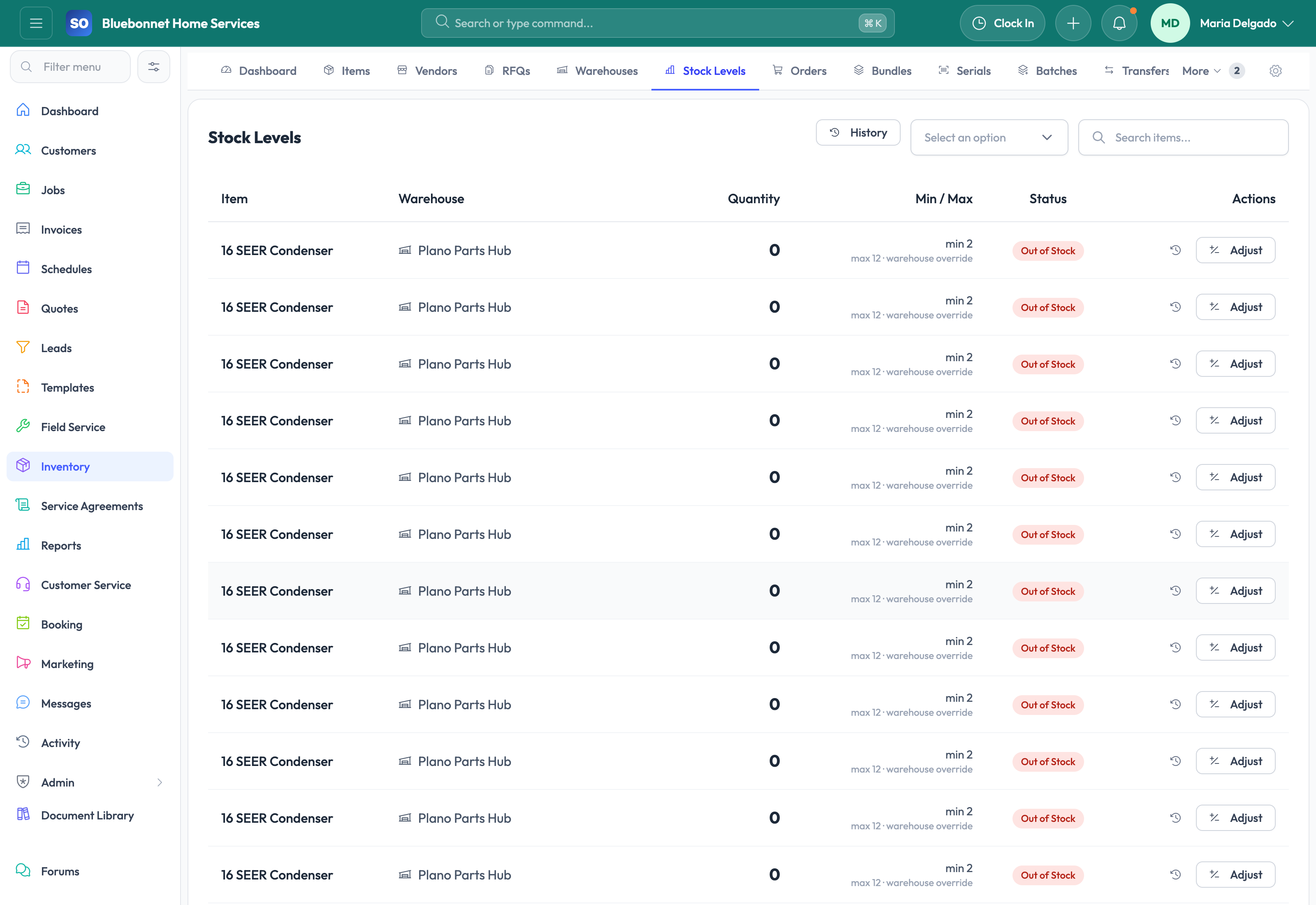
Real stock visibility: Teams need to know what is on hand, what is reserved, and what is available across warehouses and truck stock.
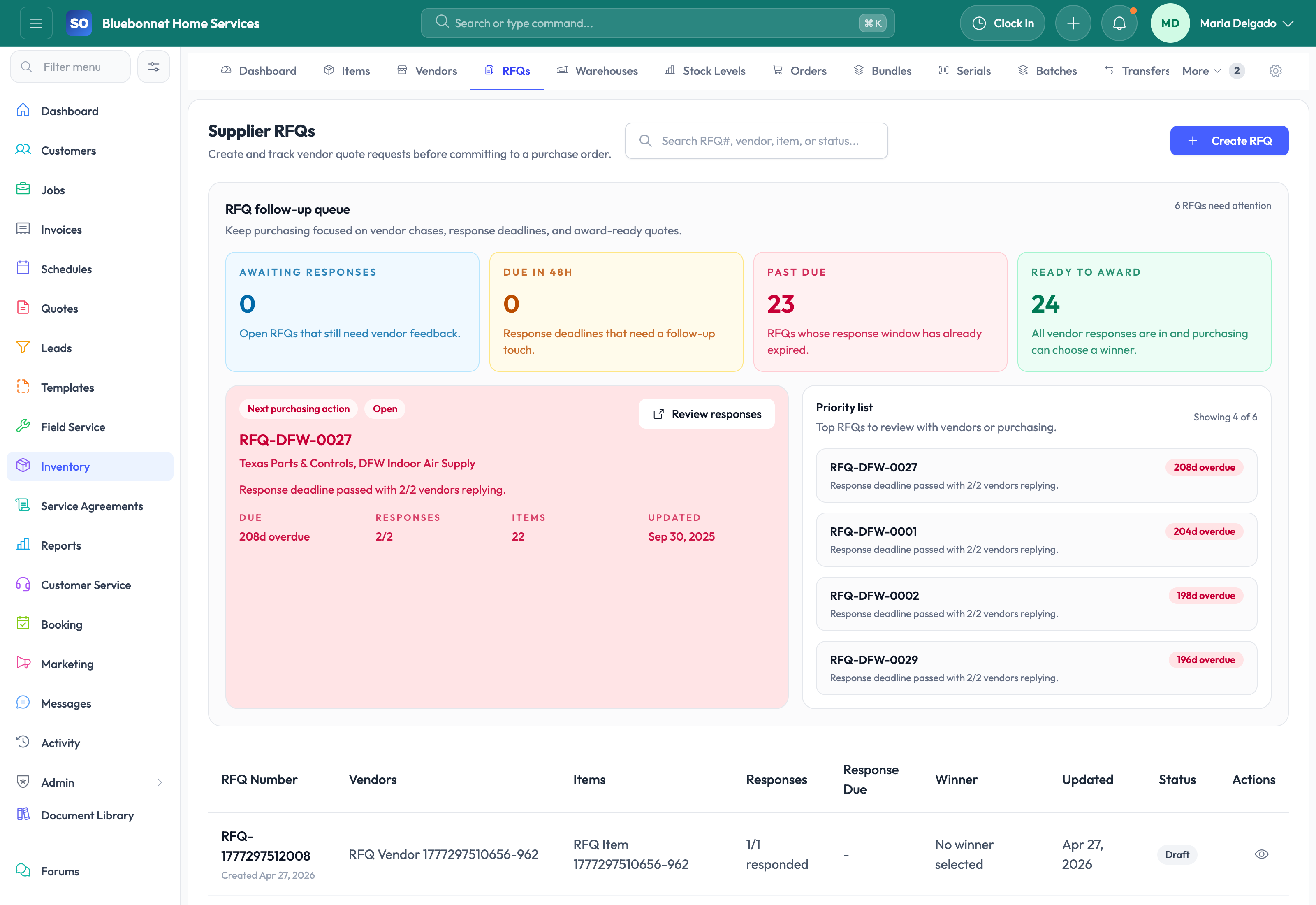
Faster replenishment: Buyers need low-stock alerts, forecasting, vendor data, and purchasing tools before shortages disrupt scheduled work.
Job readiness: Dispatch and project staff need to see whether required materials are actually ready for the job.
Operational control: Receiving, transfers, cycle counts, serials, batches, and returns should be traceable instead of informal.
How Service Opus Helps
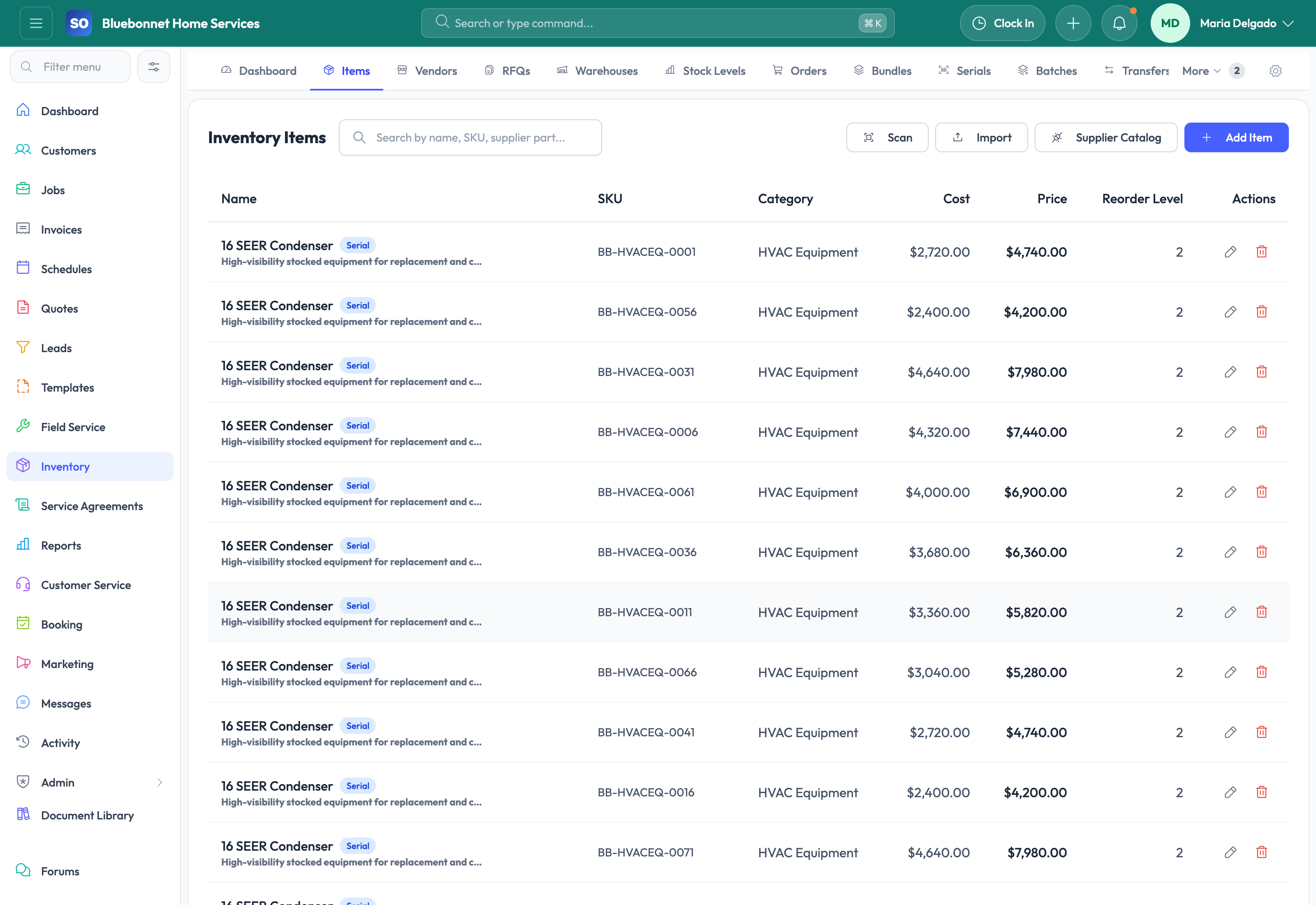
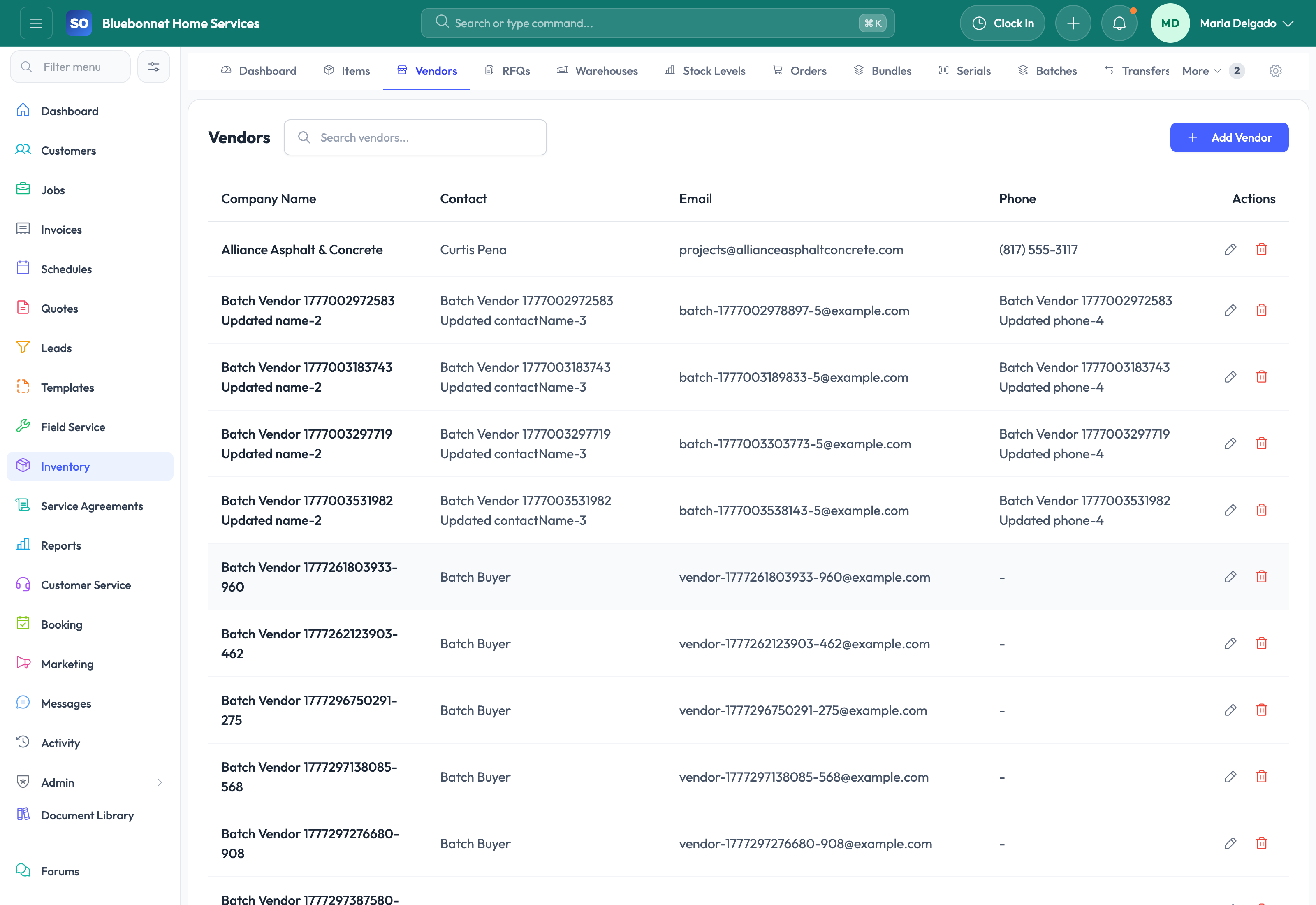
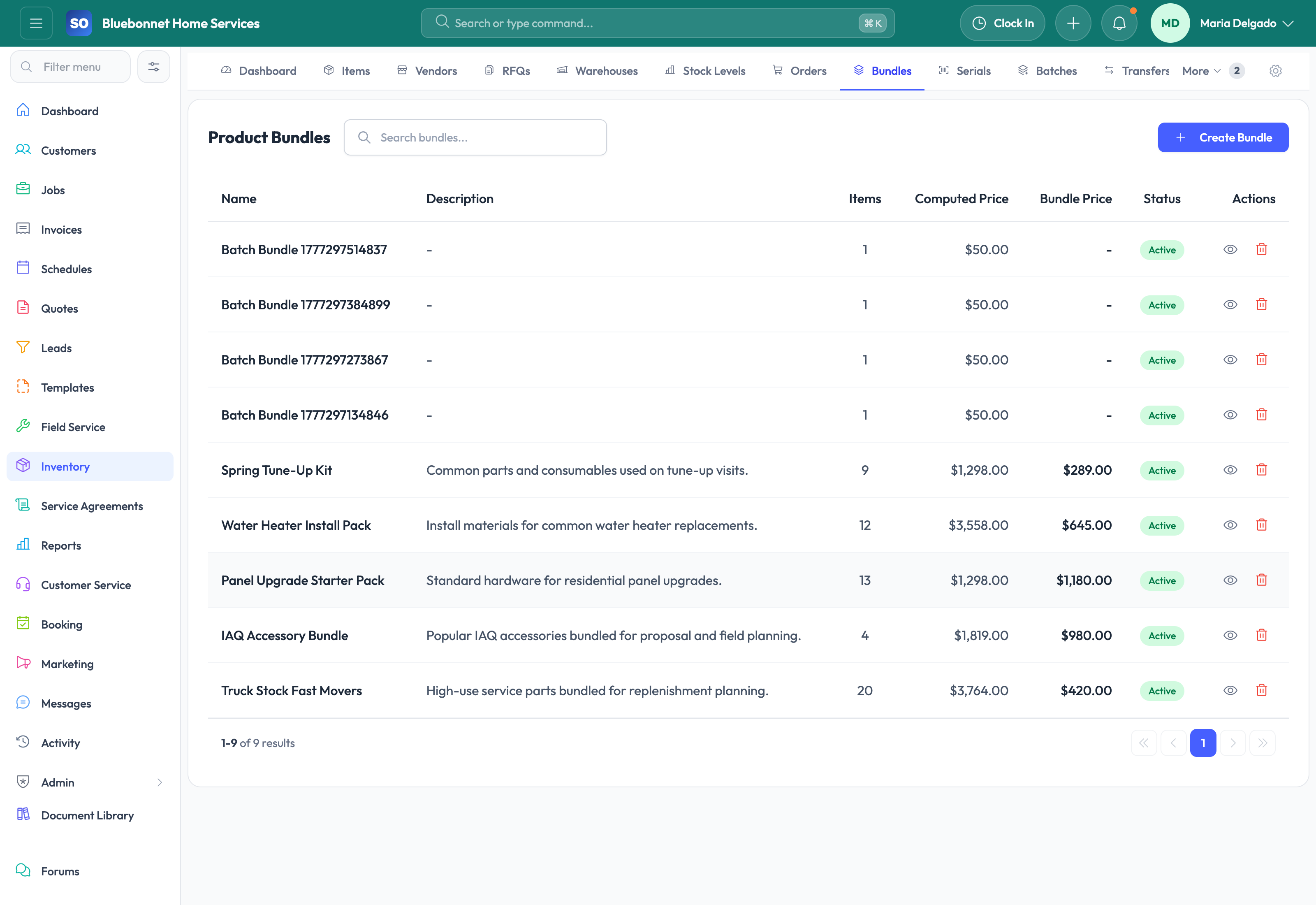
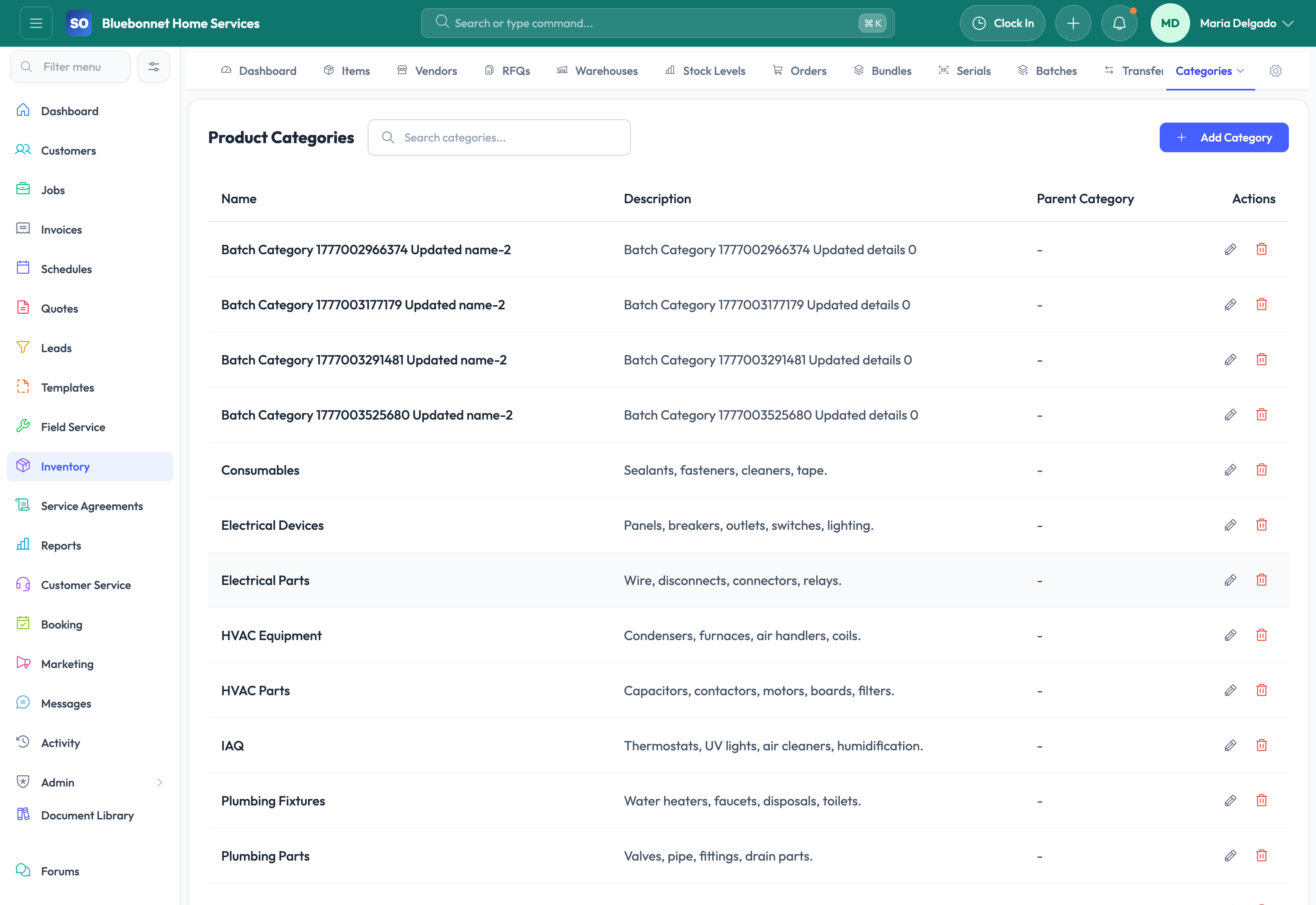
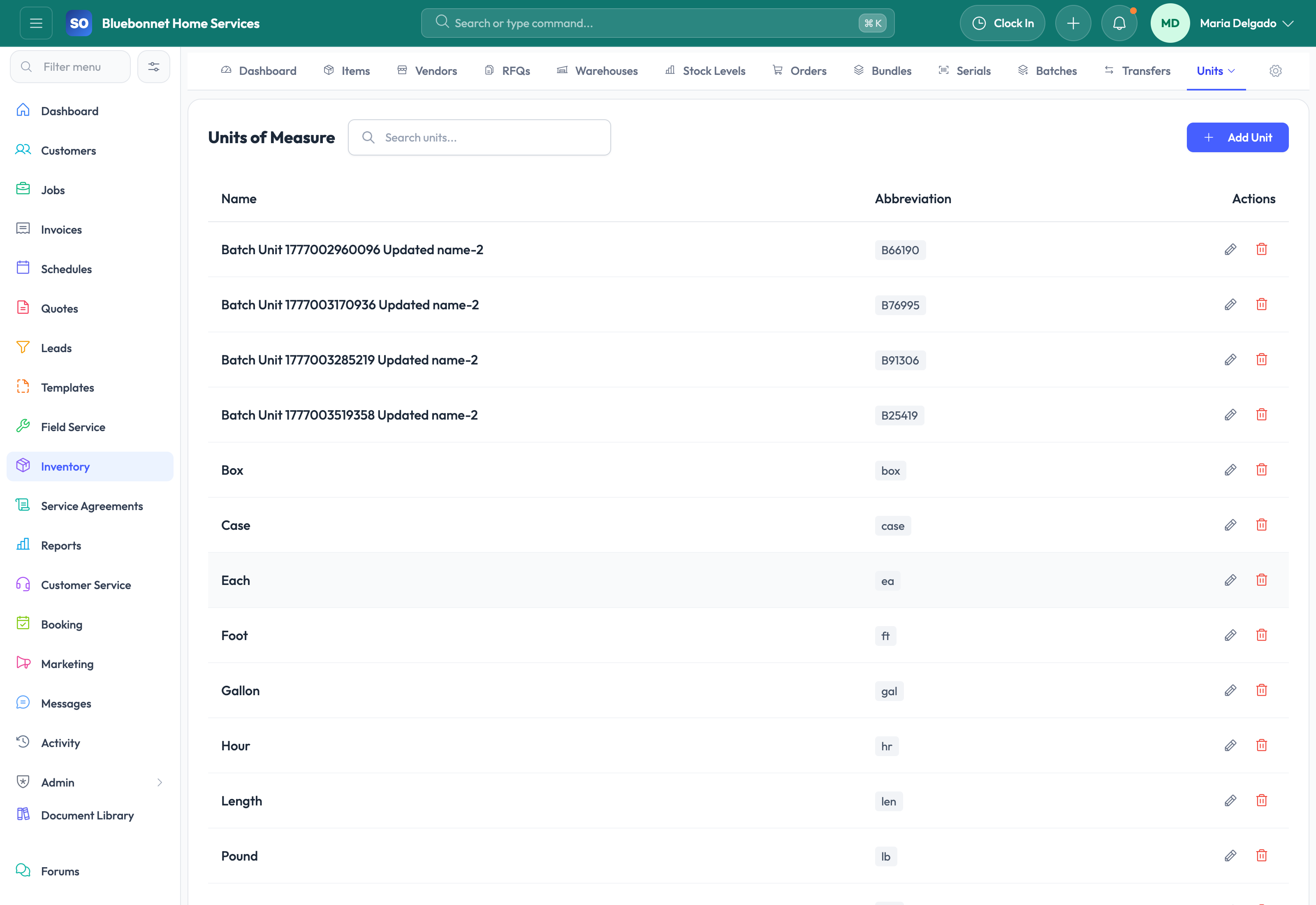
Inventory master data: Manage items, categories, units of measure, bundles, vendor relationships, alternate suppliers, and costing details.
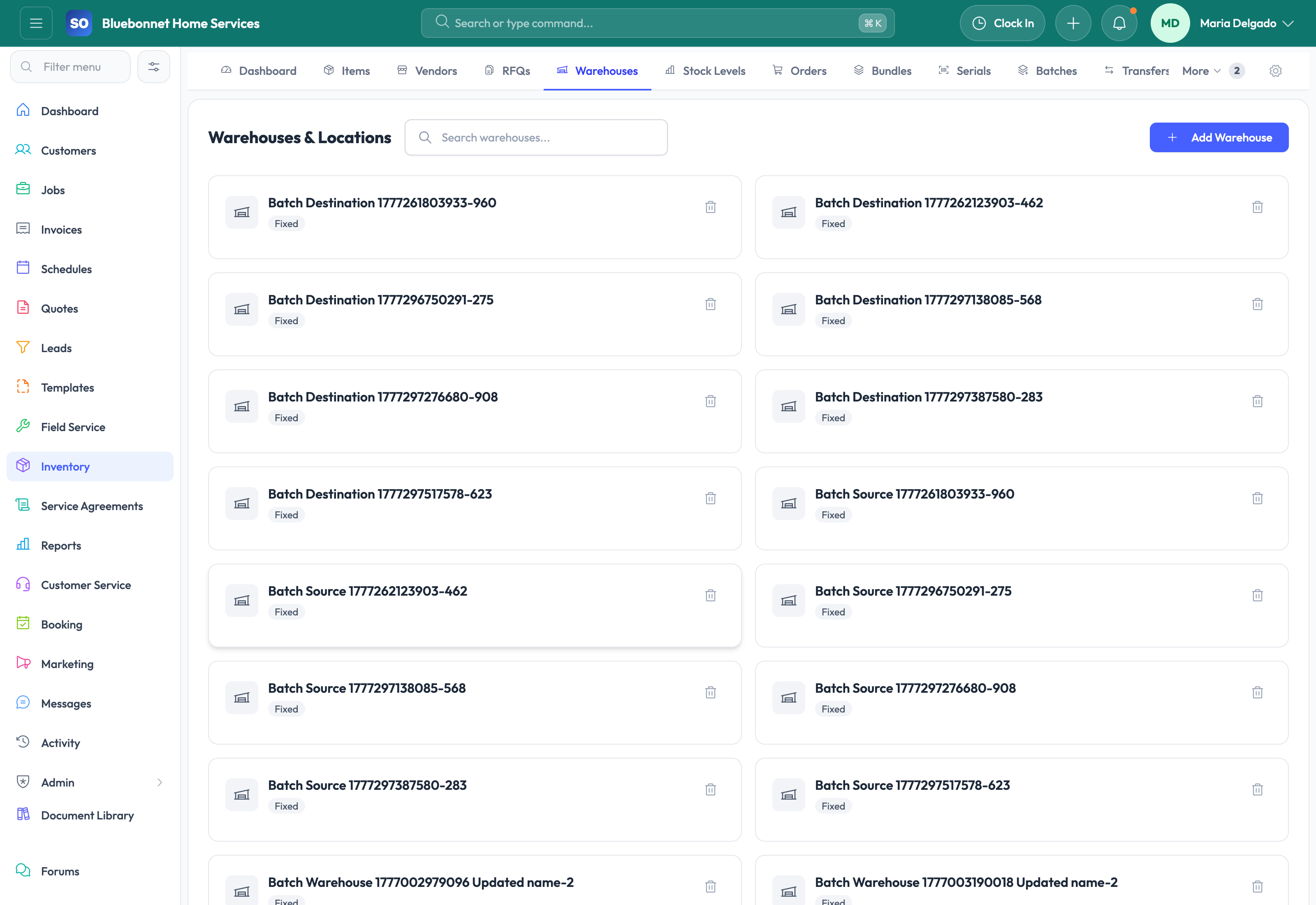
Multi-warehouse and truck stock: Track stock by warehouse, sublocation, or mobile warehouse so shop and vehicle inventory stay visible together.
Reservations, issue, and return flows: Reserve materials to jobs, issue them from warehouse or truck stock, and return unused parts without losing the history.
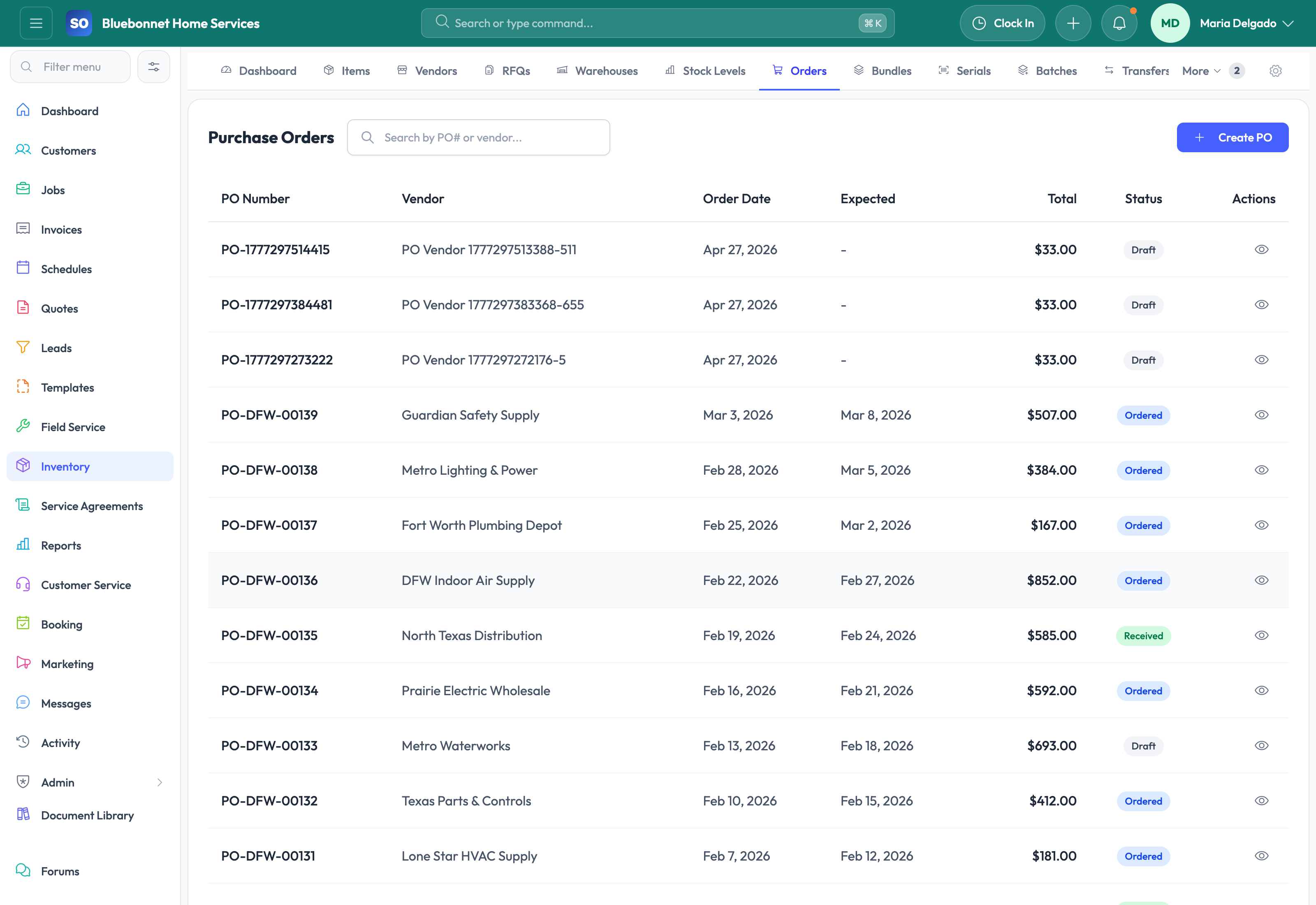
Purchase orders and receiving: Create POs, receive by line, handle partial receipts, update expected dates, and keep receipt history tied to purchasing records.
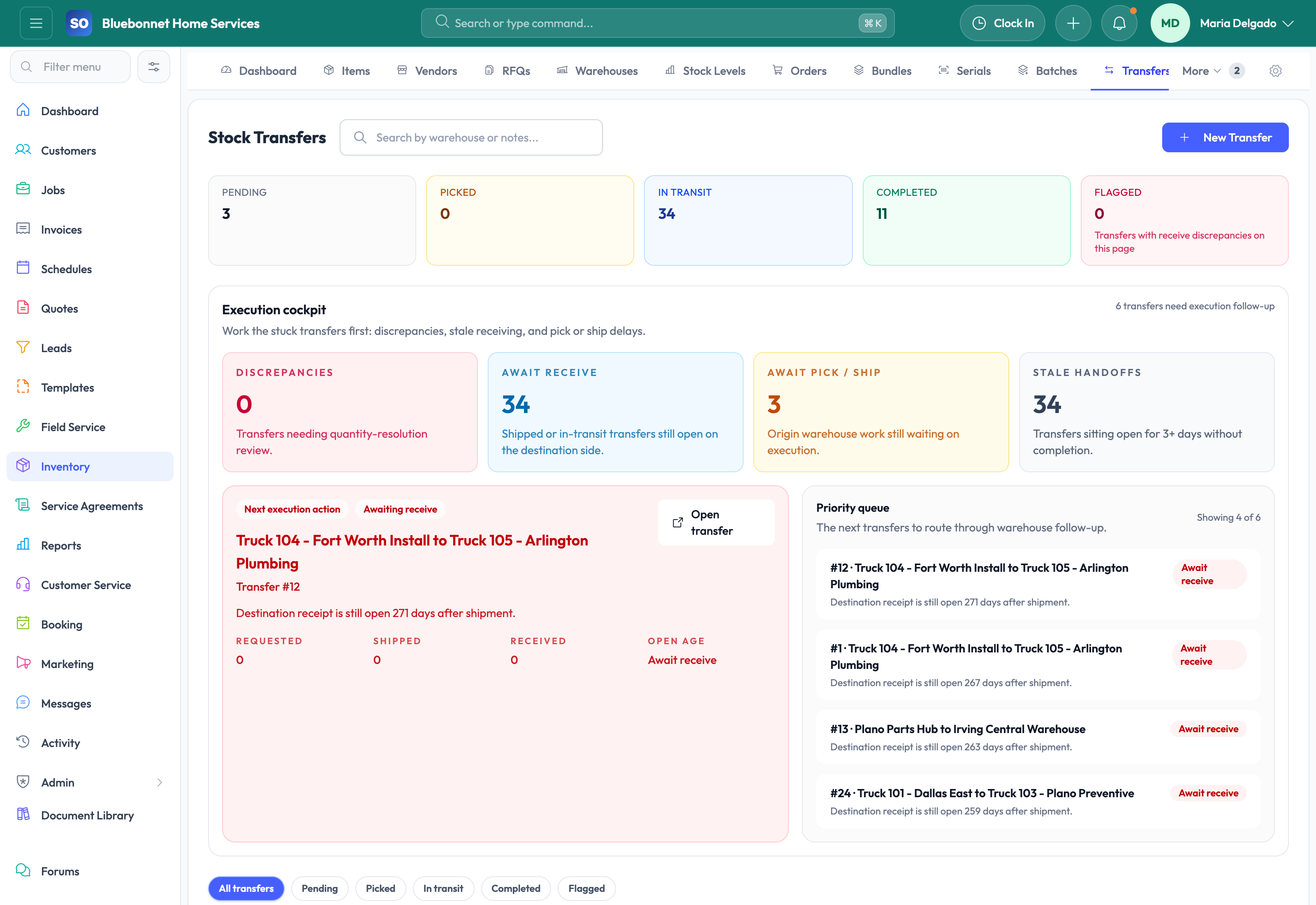
Transfers, cycle counts, and audits: Move stock between locations, run counts, review variances, and keep warehouse accuracy under control.
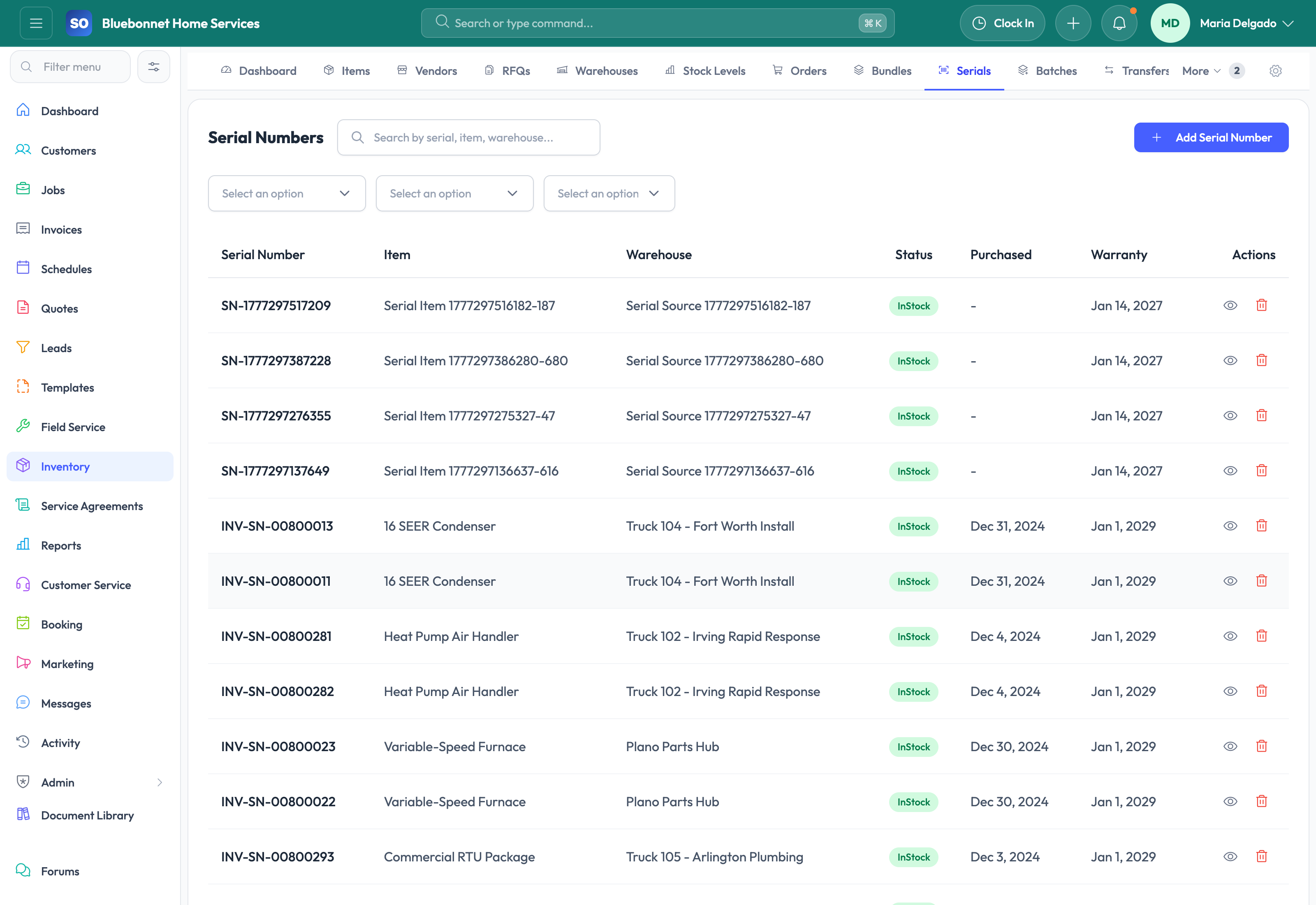
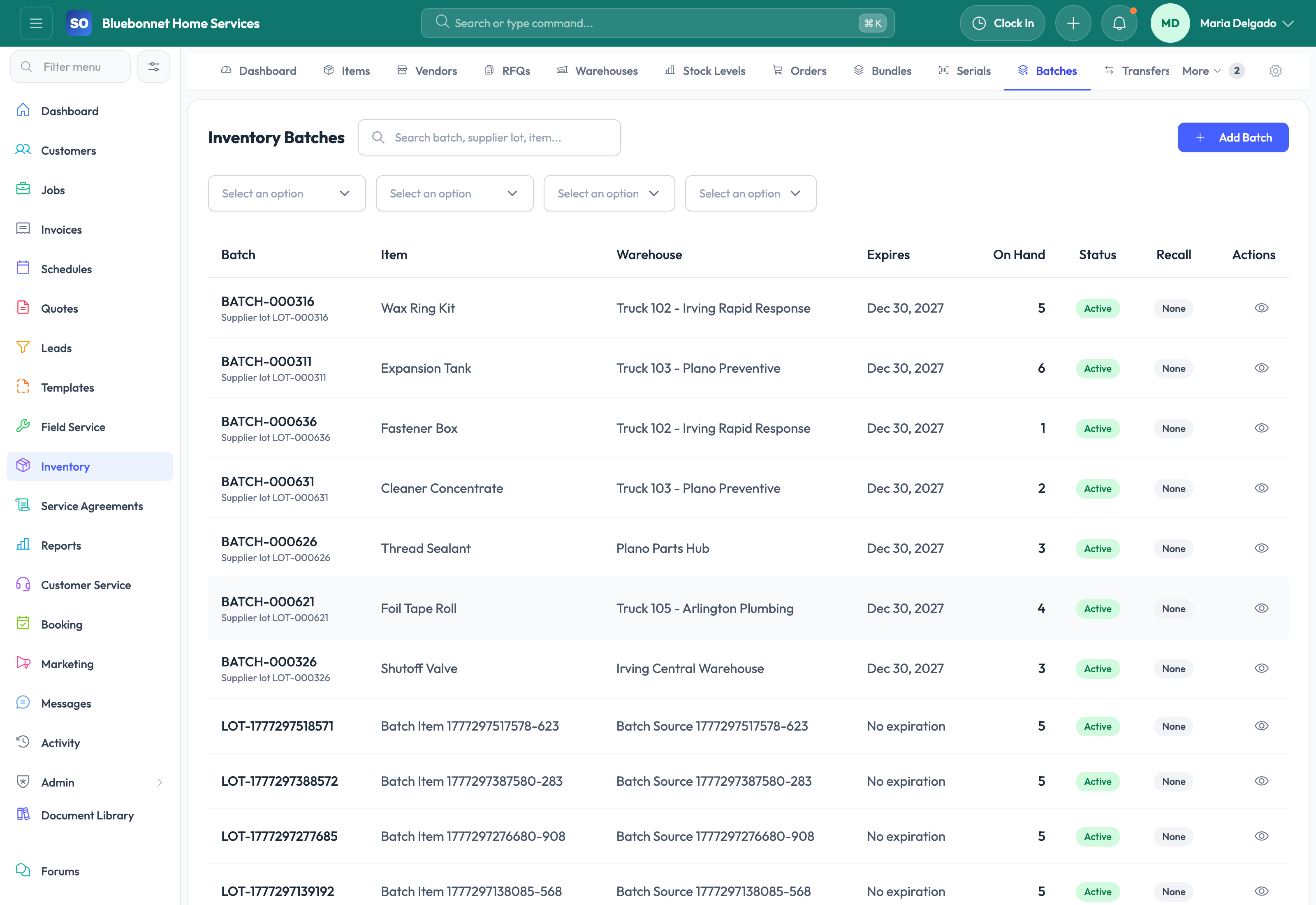
Serial and batch tracking: Support traceability for serialized items and batch-controlled materials with warranty, expiration, and recall context.
Forecasting and replenishment: Use stock alerts, demand signals, open PO context, job reservations, and seasonality-aware guidance to plan replenishment earlier.
Reporting and scan support: Review value summaries, movement history, stock alerts, and forecasting outputs while supporting QR or barcode-assisted workflows.
What Better Inventory Control Changes
Service Opus helps inventory move from a passive parts list to an active operations tool. Purchasing becomes more intentional, jobs are less likely to stall for missing material, and managers can trust stock-related reporting more when making service and pricing decisions.