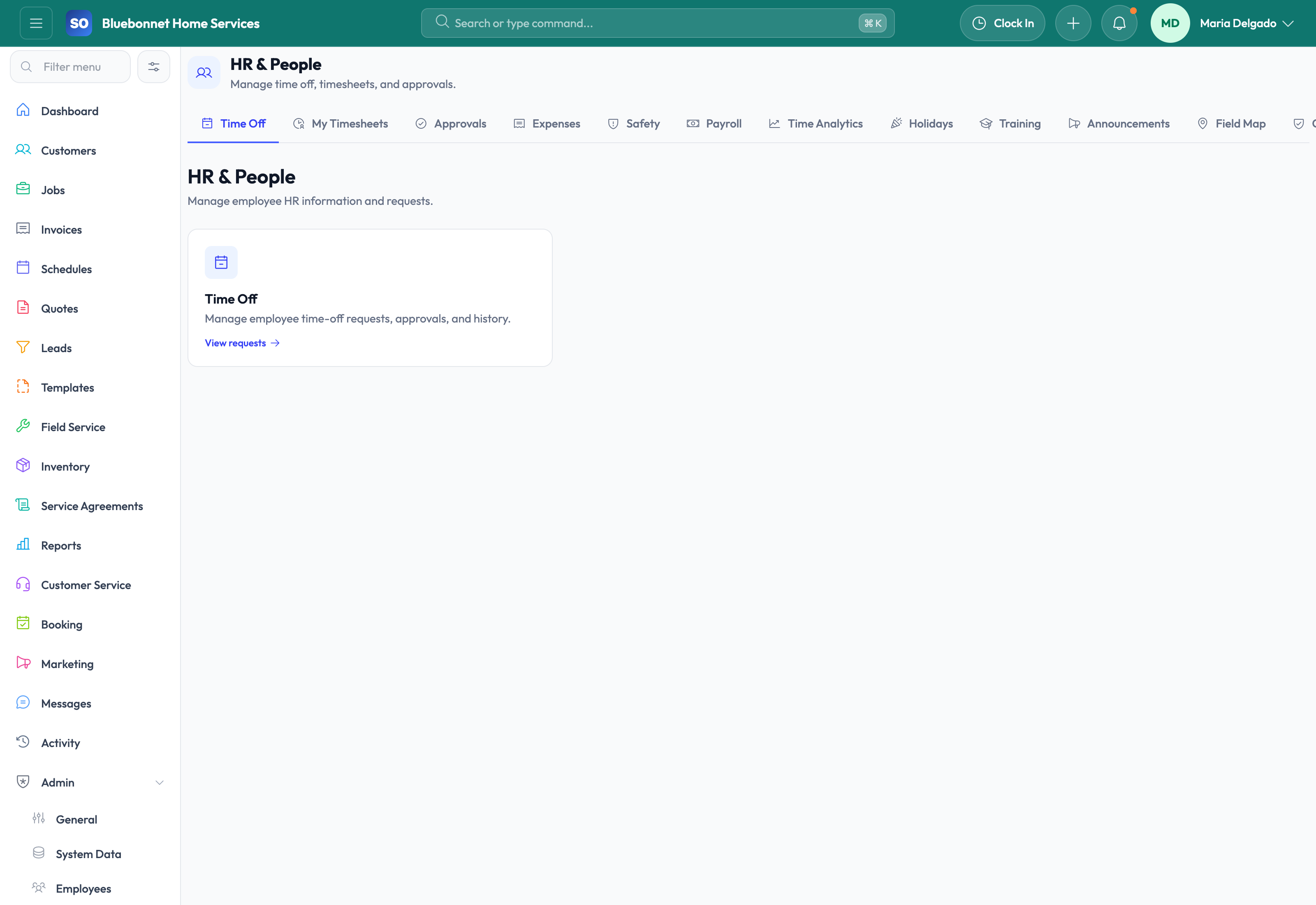
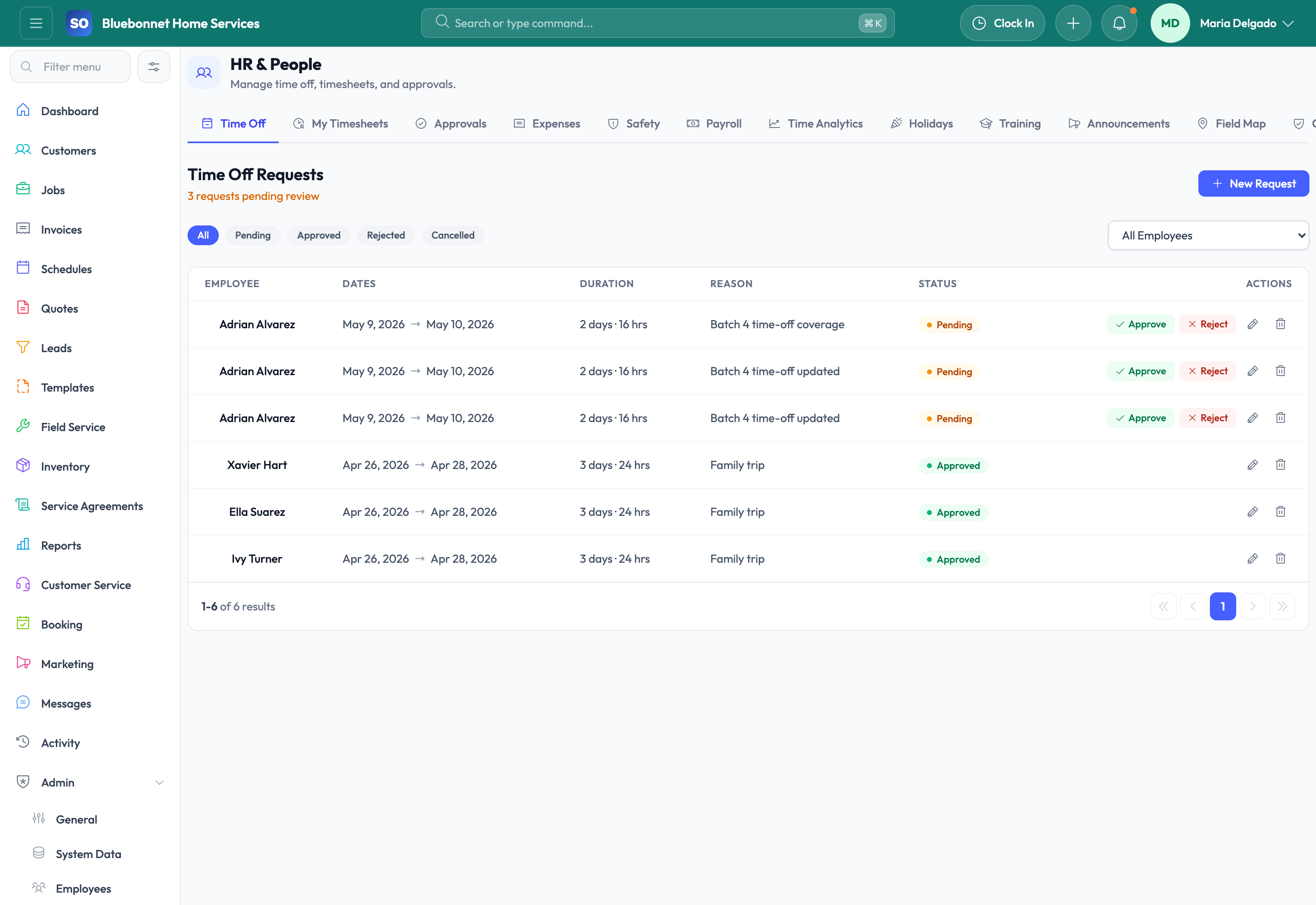
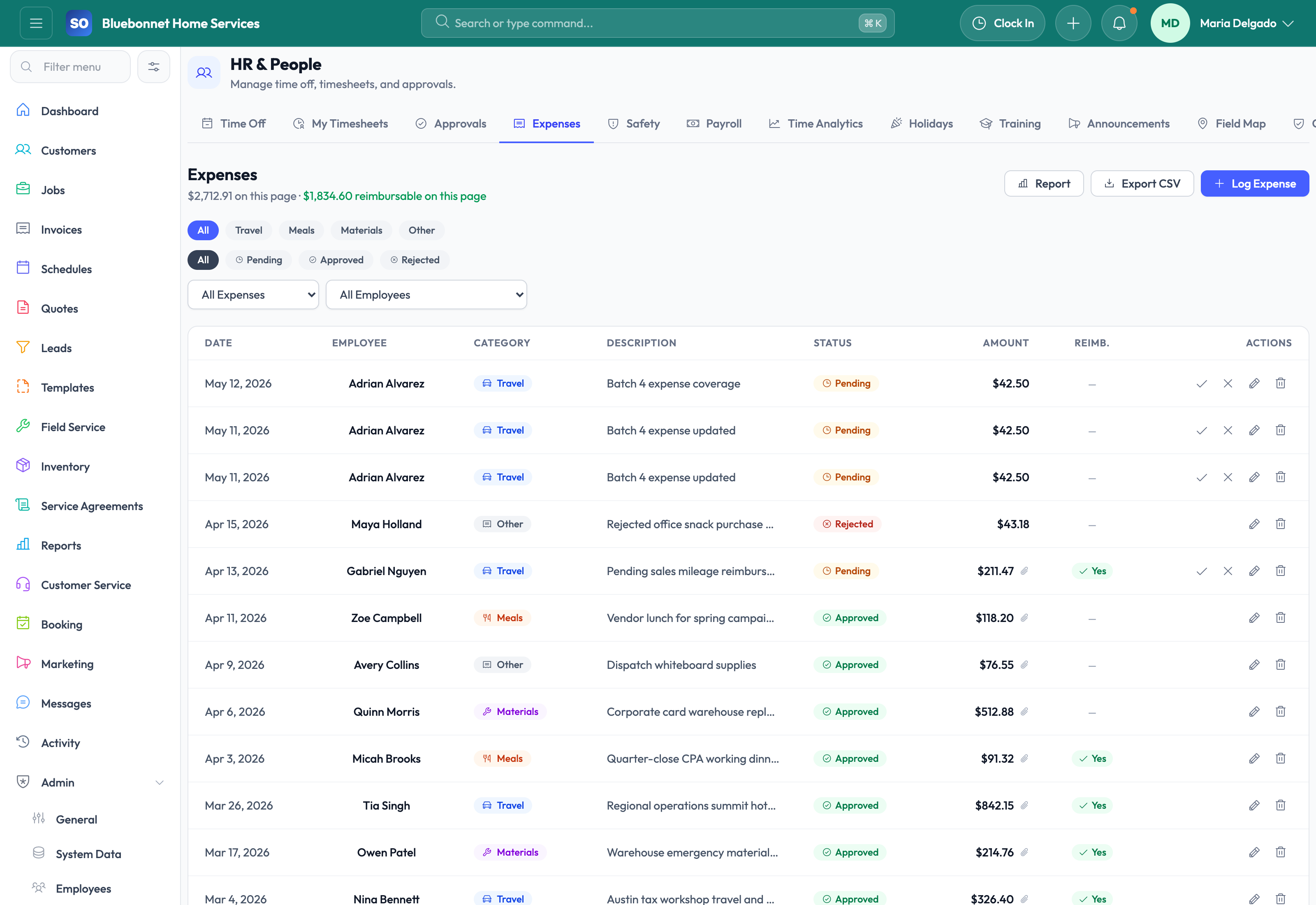
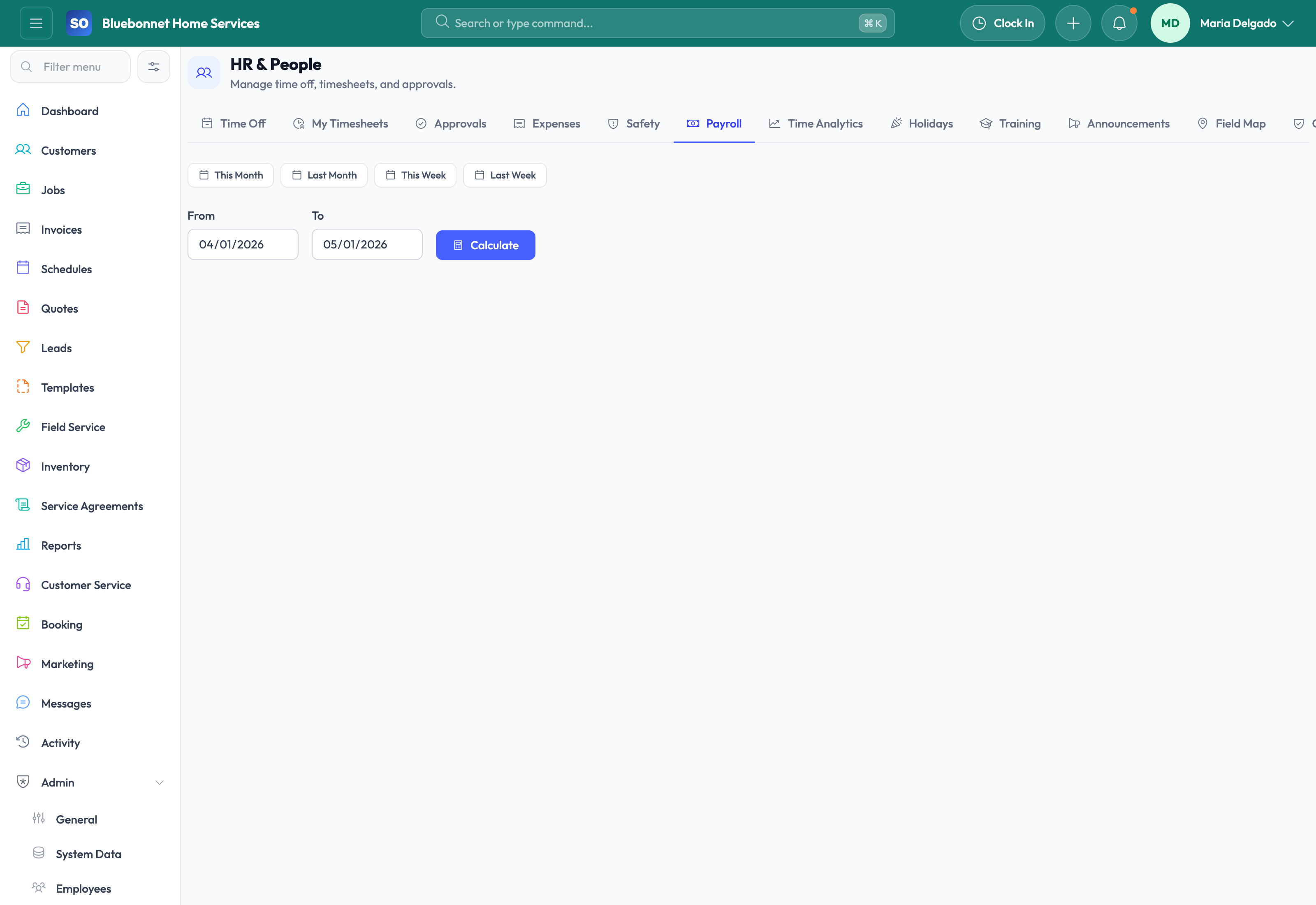
Manage the people behind the work with better visibility into roles, skills, readiness, training, compliance, and employee lifecycle workflows.
See it in action
Service businesses depend on the right person showing up with the right skills, permissions, certifications, and schedule availability. HR data becomes operational data very quickly in the trades. Service Opus helps keep employee records, workforce readiness, and people workflows close to the scheduling and job system instead of buried in disconnected admin tools.
Business Needs It Solves
Workforce readiness: Managers need to know who is active, qualified, available, and appropriately permissioned for the work being assigned.
Cleaner people operations: Teams need a system for employee records, time off, onboarding, training, reviews, and audit history.
Better dispatch alignment: Skills, working hours, territories, and team assignments should inform scheduling decisions automatically.
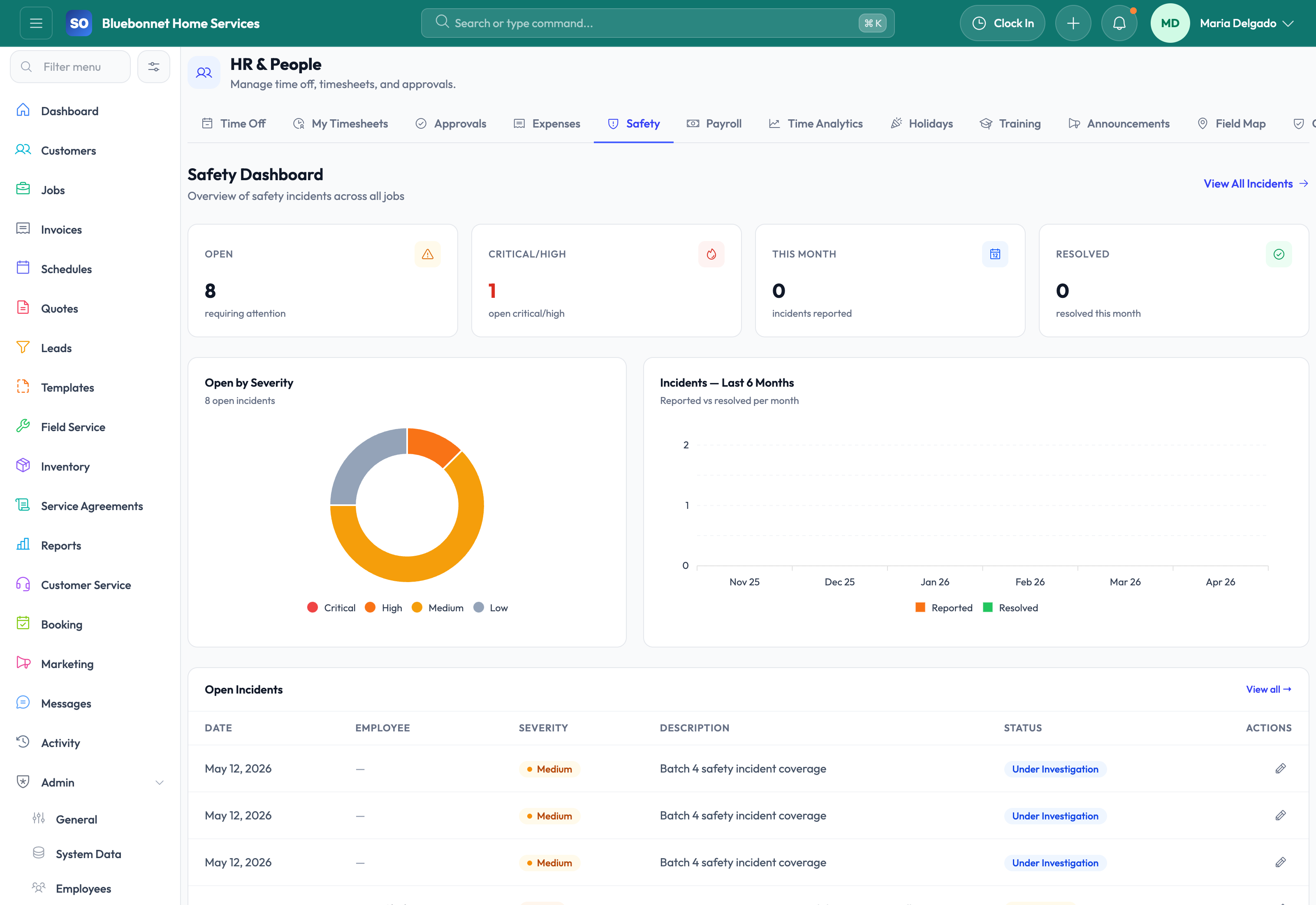
HR accountability: Pay rates, deductions, certifications, safety incidents, and audit trails need to stay visible and organized.
How Service Opus Helps
Employee profiles and permissions: Manage employee details, roles, status, emergency contacts, documents, pay settings, and feature permissions from one record.
Teams, skills, and scheduling preferences: Track team membership, skill proficiency, working hours, territory preferences, and availability so dispatch can make better assignment choices.
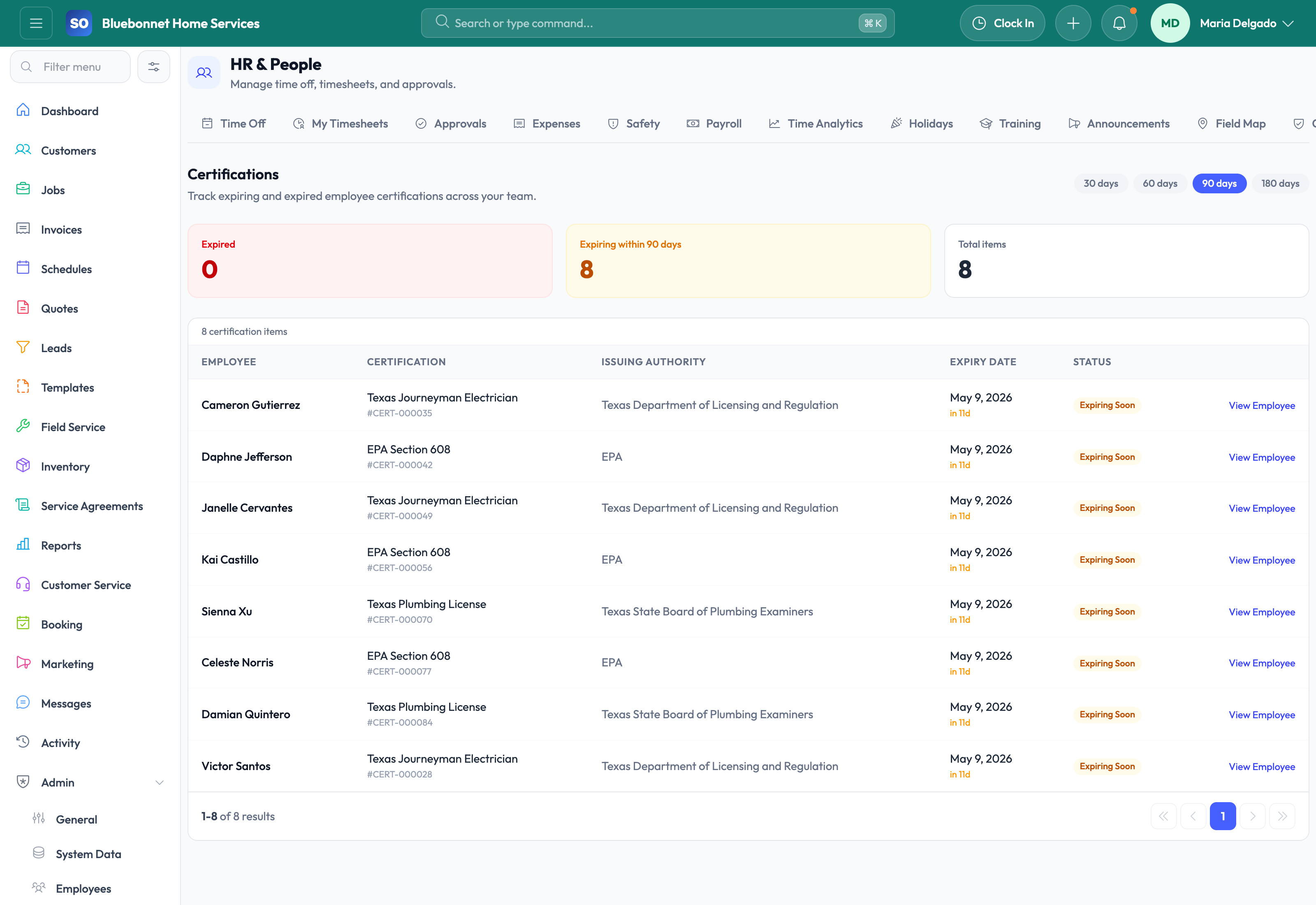
Certifications and compliance readiness: Keep credential and expiry visibility tied to the employee instead of maintaining separate compliance spreadsheets.
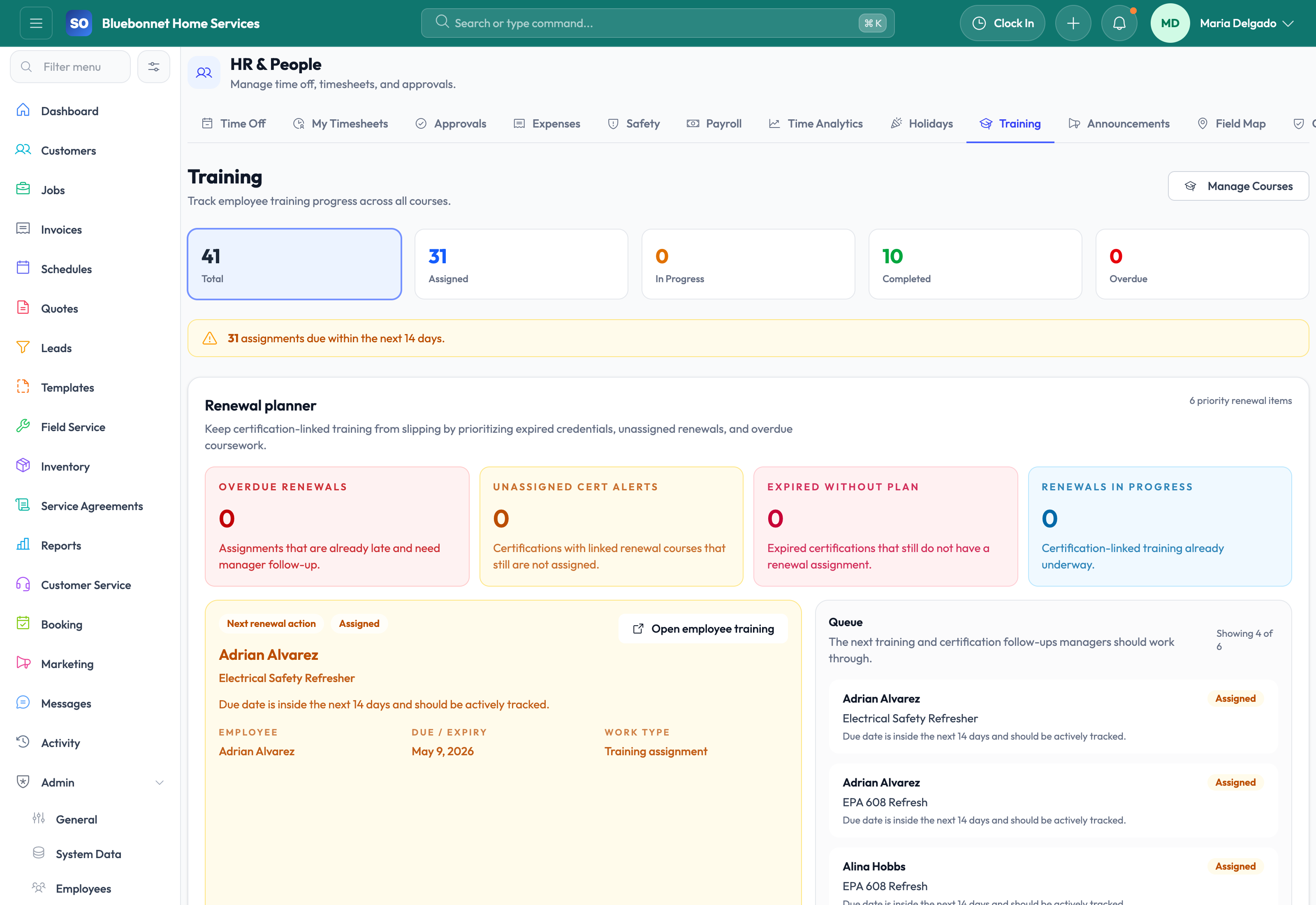
Time off, onboarding, and training: Support time-off requests, onboarding templates, assigned training, linked certification follow-up, and related workforce tasks.
Performance and satisfaction visibility: Review job performance, customer satisfaction scores, goals, reviews, and workload history inside the employee experience.
Payroll and deductions context: Carry pay rates, overtime rules, deductions, approved time, and payroll summaries close to the operational data they depend on.
Audit and HR history: Use employee audit logs and related workflow records to support compliance, dispute resolution, and internal accountability.
Why This Matters Beyond HR
Strong employee data improves more than administration. It directly affects scheduling quality, technician utilization, service quality, and compliance confidence. Service Opus is especially useful when you want workforce decisions to be informed by the same system that is running the work.
Scheduling value: Accurate skills, team membership, availability, and working hours make Scheduling & Dispatch much more realistic and reduce avoidable assignment problems.
User Guide
Keep employee data, availability, skills, certifications, time off, payroll context, and team readiness current.
Best For
Managers maintaining employees, teams, roles, and permissions.
Dispatchers relying on skills and availability.
Supervisors reviewing time off, safety, training, and certifications.
Before You Start
Create employee profiles with role, contact, team, working hours, skills, and permissions.
Define time-off workflows, training records, certification types, and safety incident categories.
Confirm who approves requests, expenses, payroll review, and employee changes.
Recommended Workflow
Maintain employee profiles, team assignments, skills, working hours, and location context.
Review time-off requests before scheduling future work.
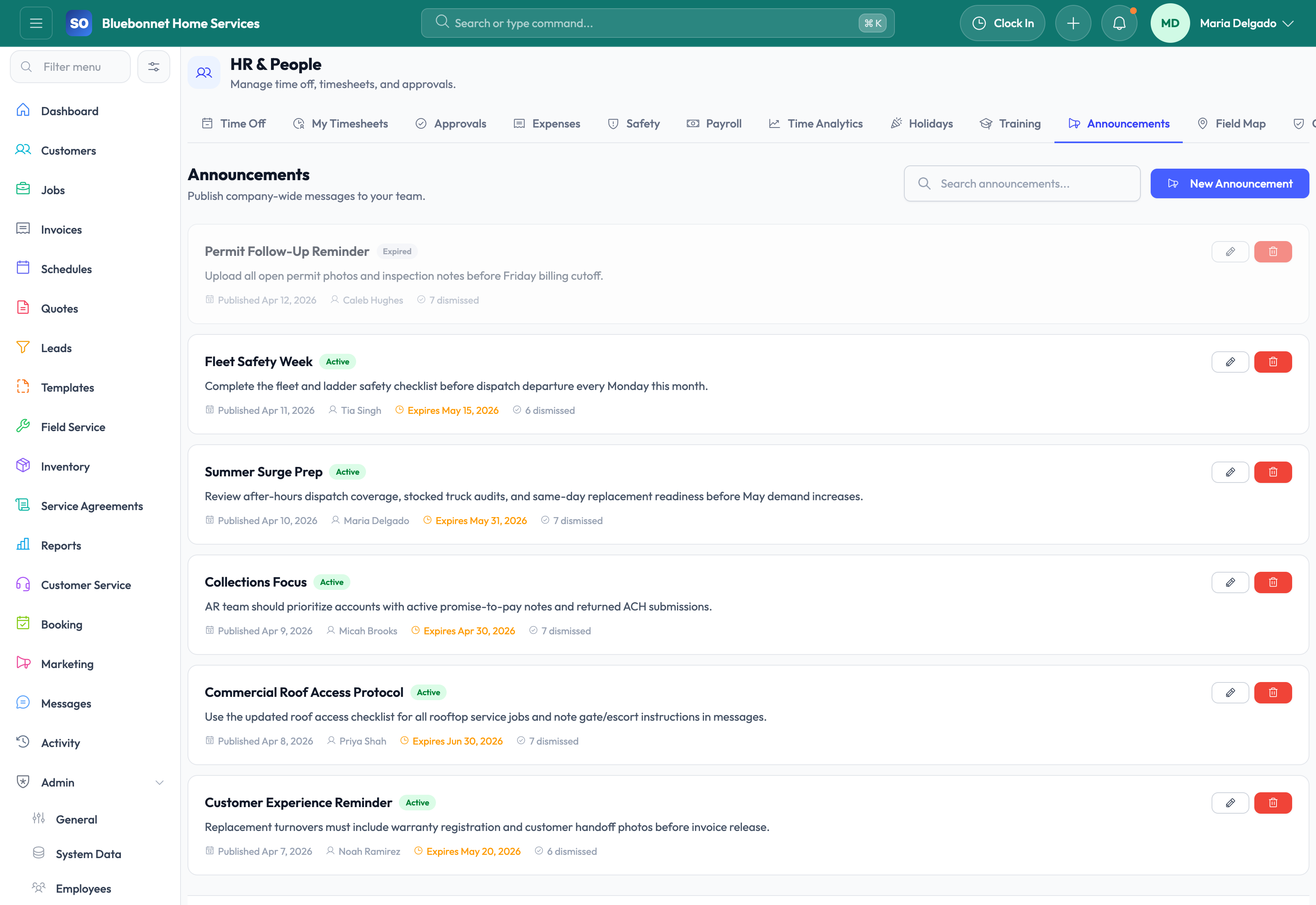
Track training, safety, certifications, expenses, payroll context, and announcements.
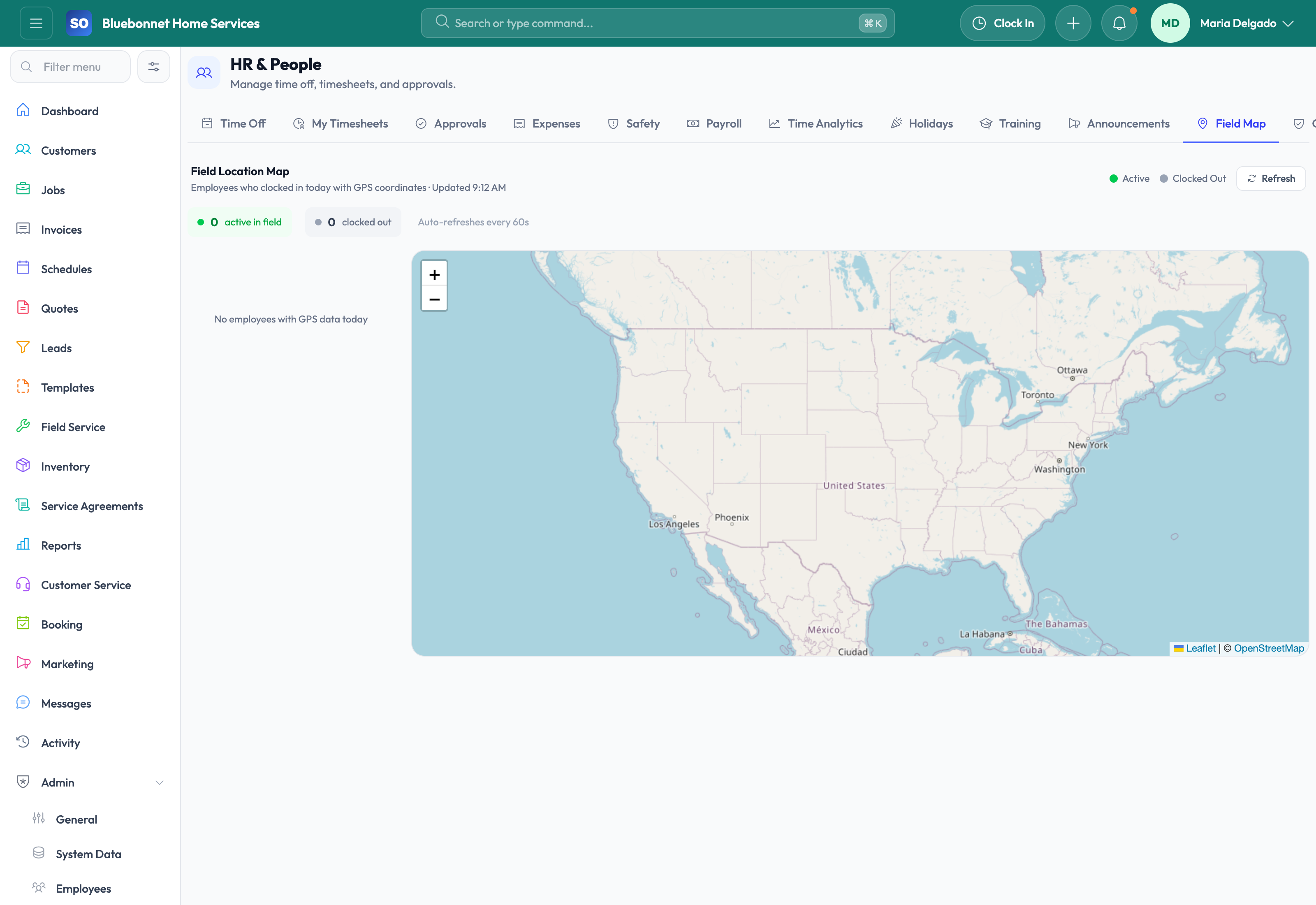
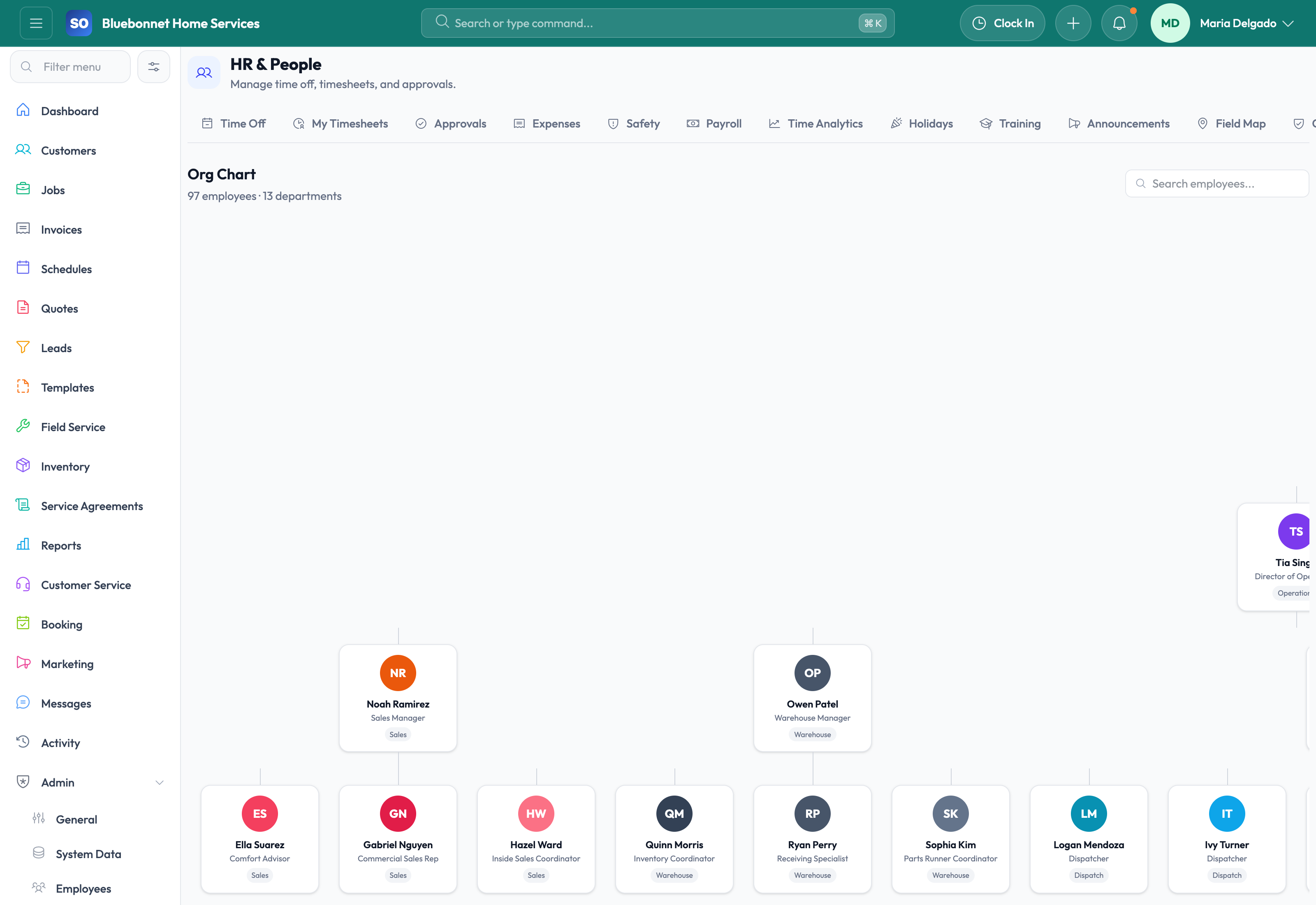
Use field maps and org views to understand team deployment and reporting structure.
Review expiring certifications or workforce gaps before they affect assignments.
Review Checklist
Inactive employees are removed from scheduling and assignment choices.
Skills and certifications are current enough for dispatch decisions.
Time off is approved or rejected before schedules are finalized.
Sensitive employee data is limited to appropriate roles.
Common Handoffs
Scheduling and Dispatch for availability and skill fit.
Time Tracking for labor capture.
Compliance for certification and safety risk.
Settings and Config for roles and permissions.
Ready to apply this workflow?
Use the guide to evaluate fit, then start a trial or talk through how Service Opus maps to your team, trade, and current operating process.