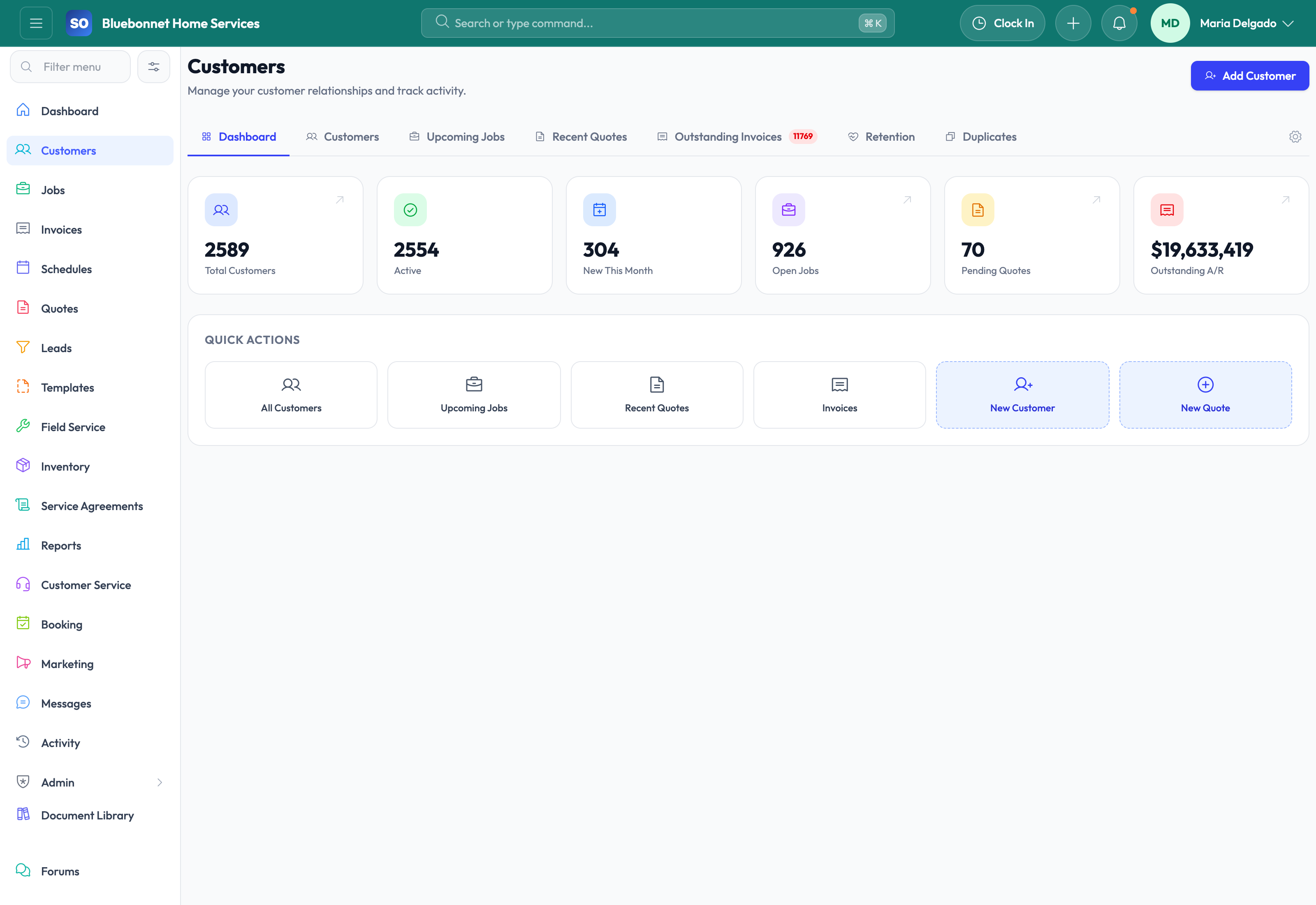
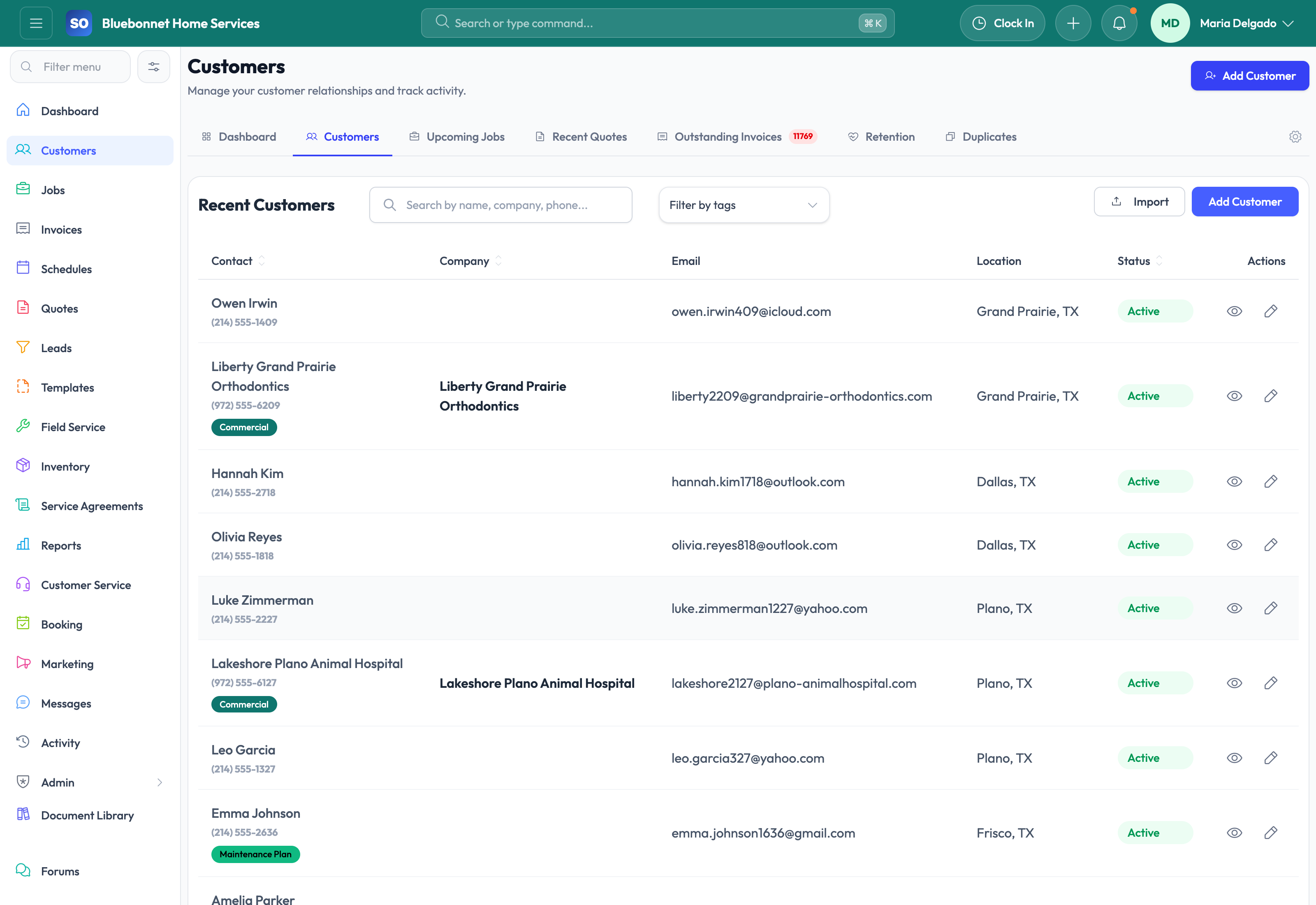
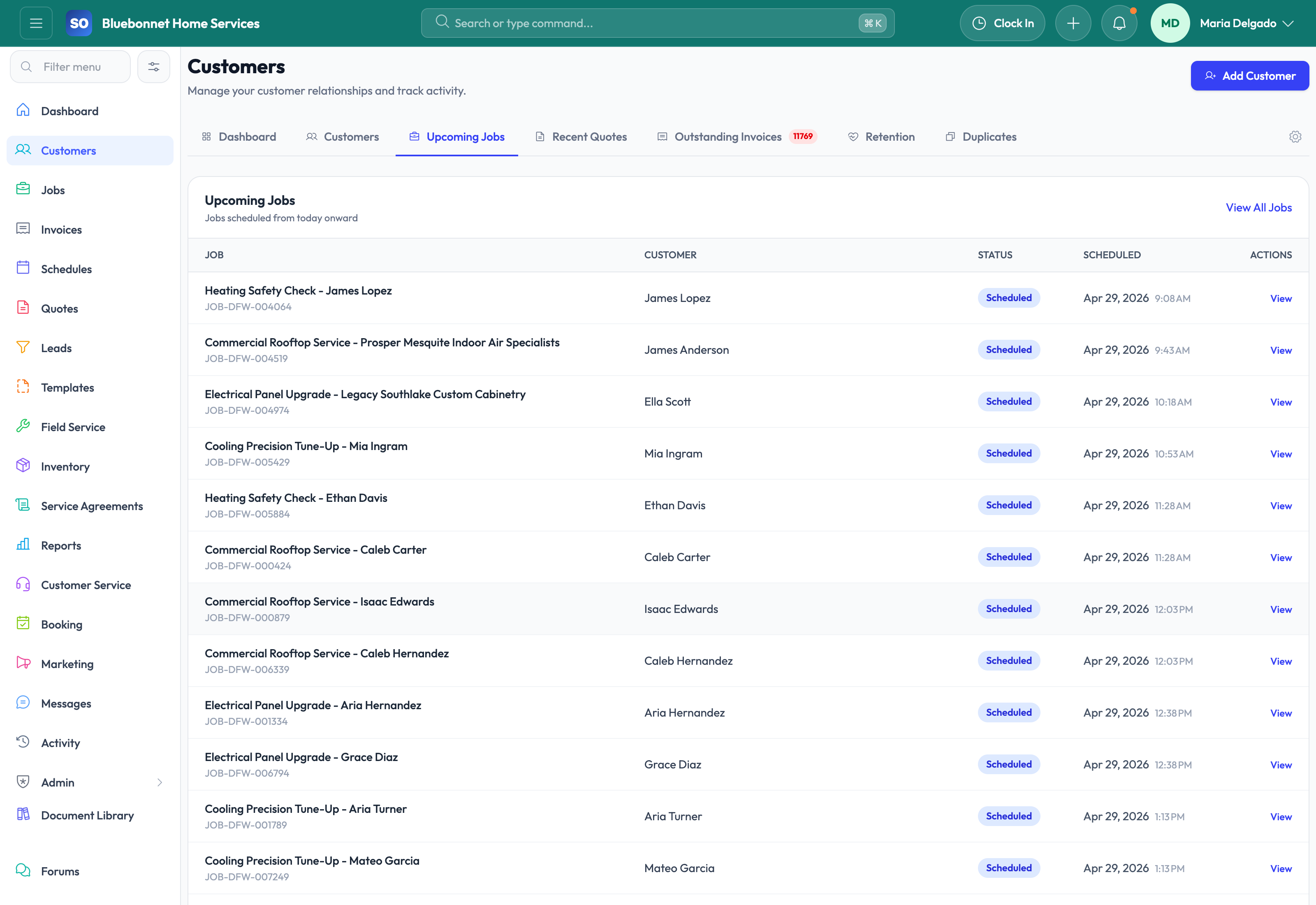
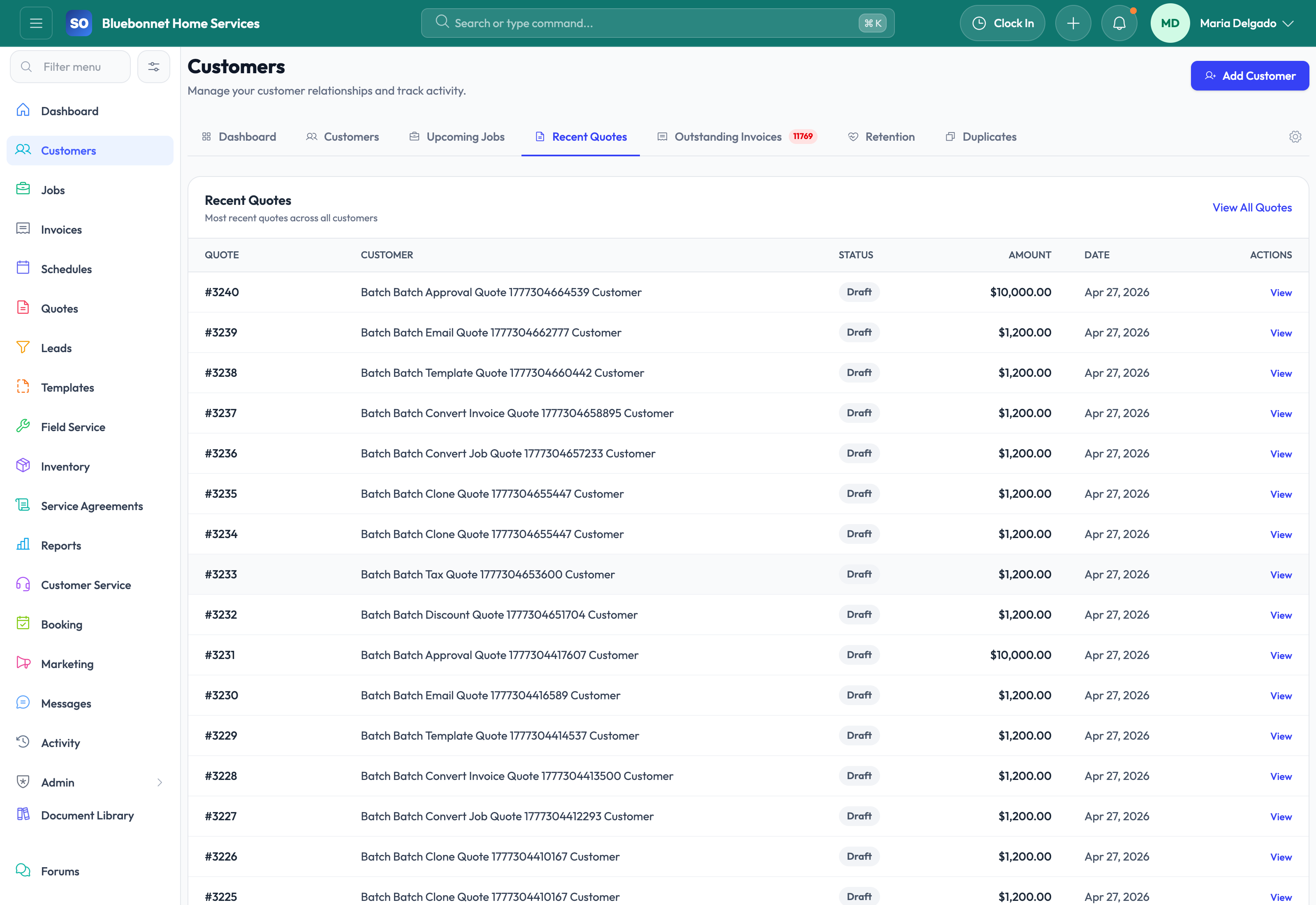
Give every team member one reliable customer record instead of forcing them to piece the account together from memory, email, and spreadsheets.
See it in action
Customer management in a trades business is not just about storing a phone number. Your office needs billing context, your dispatchers need site details, your technicians need history, and leadership needs to know which accounts are healthy, overdue, dormant, or ready for more work. Service Opus turns the customer record into a true account workspace that supports sales, service, collections, and retention.
Business Needs It Solves
One account record for the whole company: Stop losing time because sales, dispatch, accounting, and field staff all keep their own version of customer history.
Support for real-world account structures: Manage multi-site commercial customers, multiple contacts, billing contacts, on-site contacts, and location-specific notes.
Faster service continuity: Make sure the next person who touches the account can see the jobs, quotes, invoices, equipment, and conversations that came before.
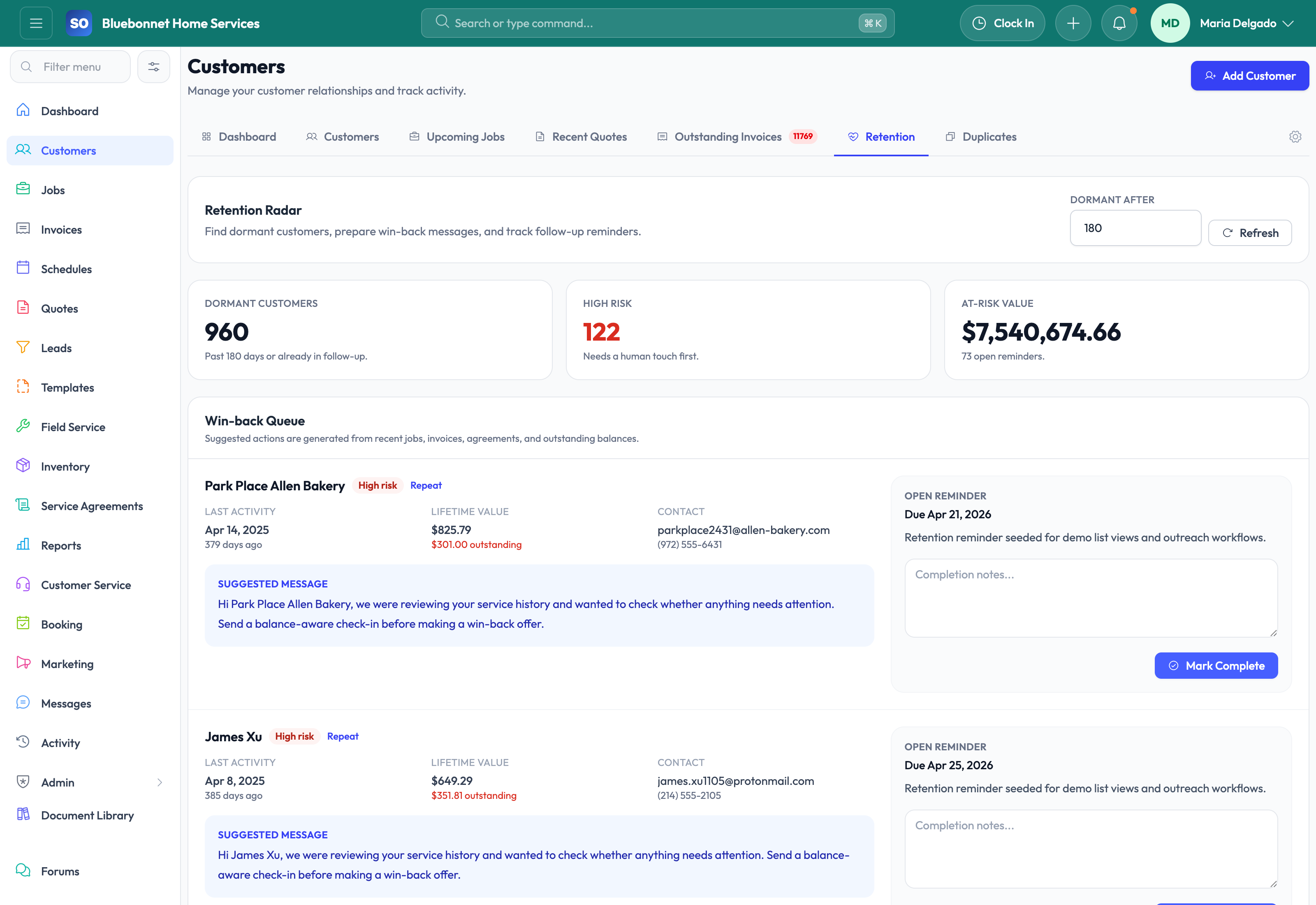
Risk and retention visibility: Spot overdue balances, missing agreements, churn signals, review opportunities, and duplicate records before they create bigger problems.
How Service Opus Helps
Rich customer workspace: Customers can carry jobs, quotes, invoices, documents, messages, notes, activity history, agreements, equipment, analytics, reviews, and relationship context in one place.
Sites and service locations: Each customer can have multiple named locations with their own access notes, scheduling notes, contacts, equipment, and service history.
Contact clarity: Track billing contacts, approvers, owners, and on-site contacts separately so your team reaches the right person the first time.
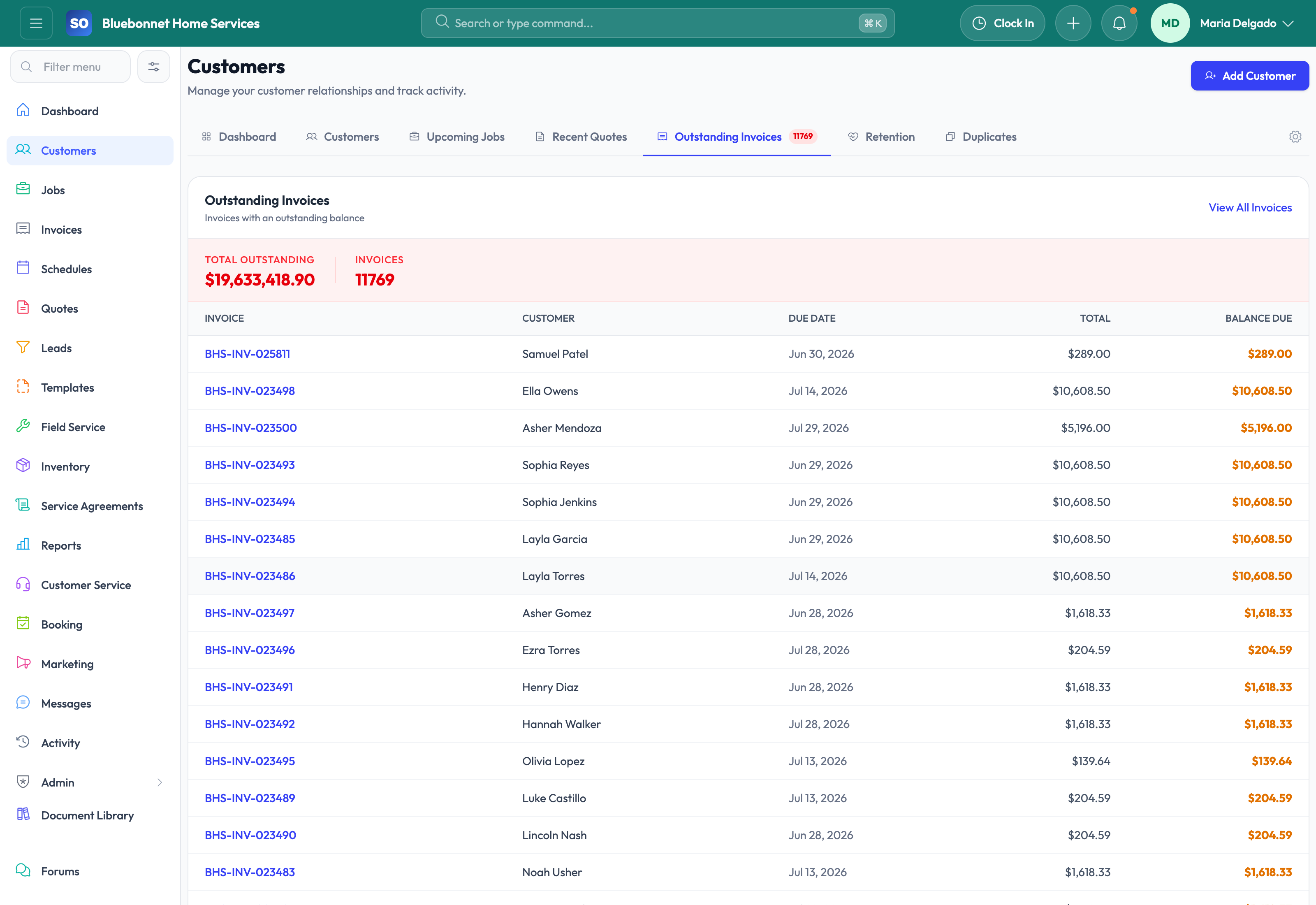
Statements and account health: See open invoices, aging buckets, last payment, credits, and customer-health signals directly on the account.
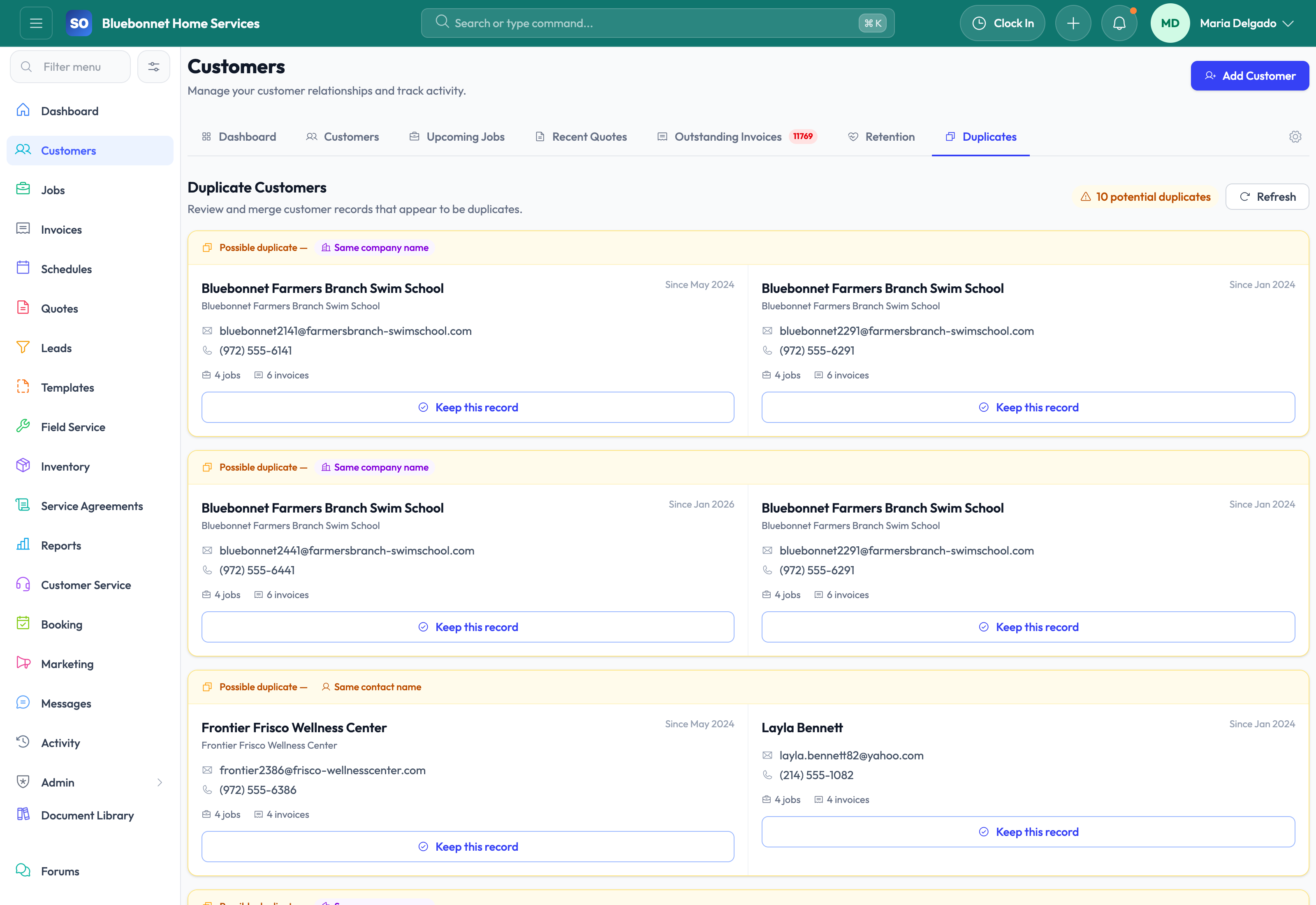
Duplicate control and imports: Import customers in bulk, detect duplicates, and merge records so the database stays trustworthy as you grow.
Portal-linked workflows: Customer records can support token-based portal links for invoices, jobs, statements, quotes, and service requests without forcing customers into a full login flow.
What This Means for a Trades Business
When the customer record is strong, every downstream workflow gets easier. Sales can quote with better context, dispatch can schedule more accurately, technicians arrive prepared, and accounting does not have to chase down billing details. Service Opus is especially valuable for companies with repeat service, commercial locations, or multiple departments touching the same account.